An imaging method integrating prismatic waves and seismic interferometry for high-steep structures
LUO Yu-Chen1(), LUO Zhang-Qing1, LIU Sheng1, OU Cheng-Hua2, WANG Ze-Yu2, LIU Chang3
1. South Branch, Sinopec Geophysical Corporation, Chengdu 610213, China 2. Petroleum Engineering School, Southwest Petroleum University, Chengdu 610500, China 3. Geophysical Research Institute, Shengli Oilfield Company,SINOPEC, Dongying 257000, China
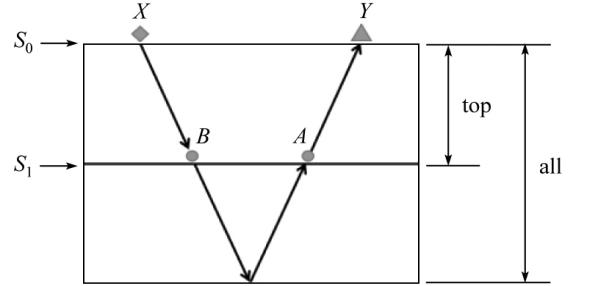
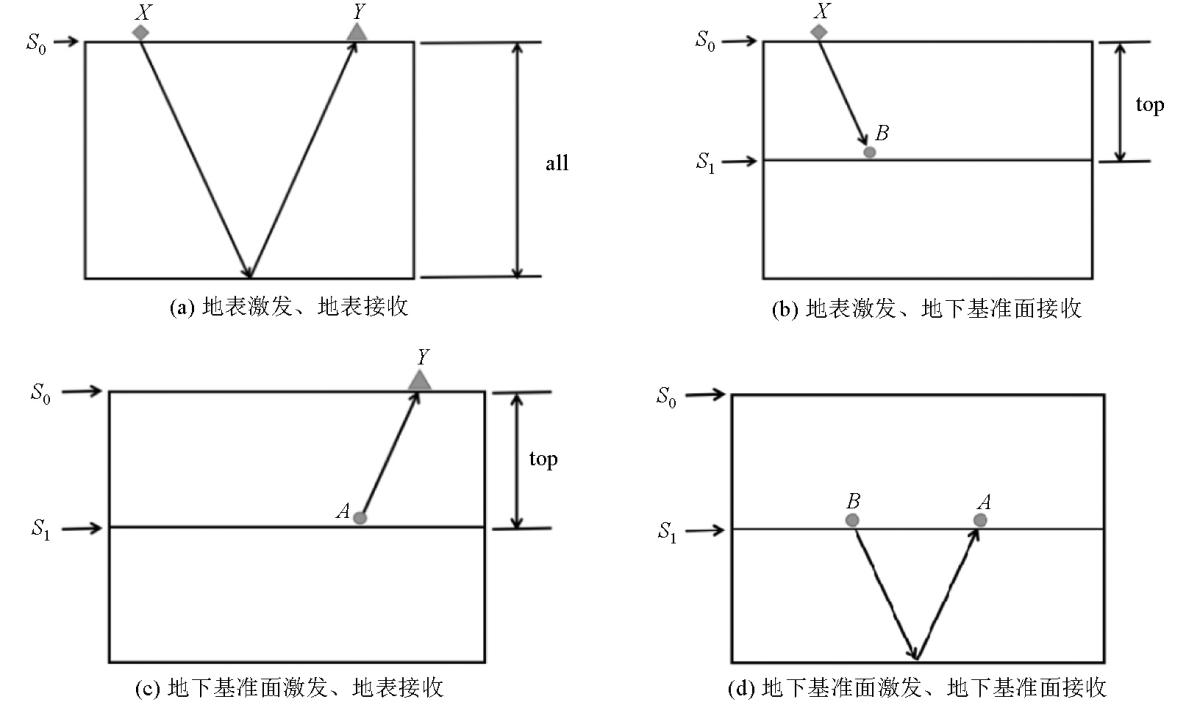
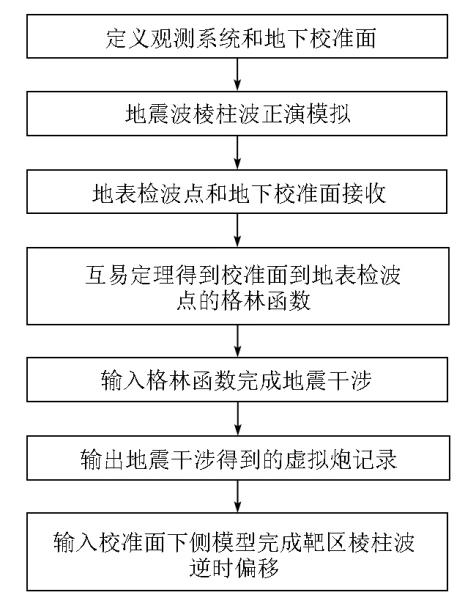
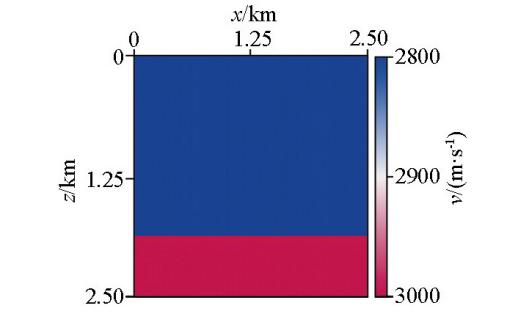
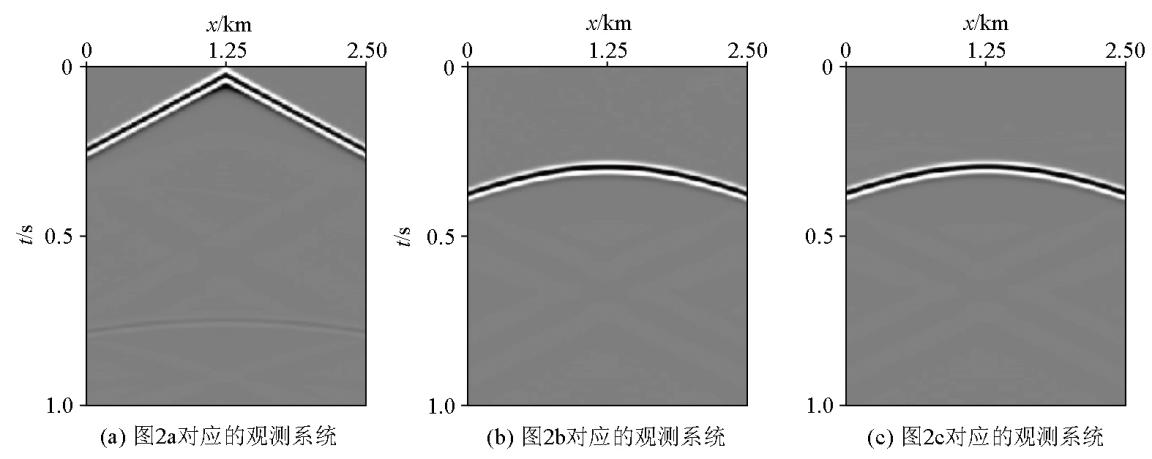
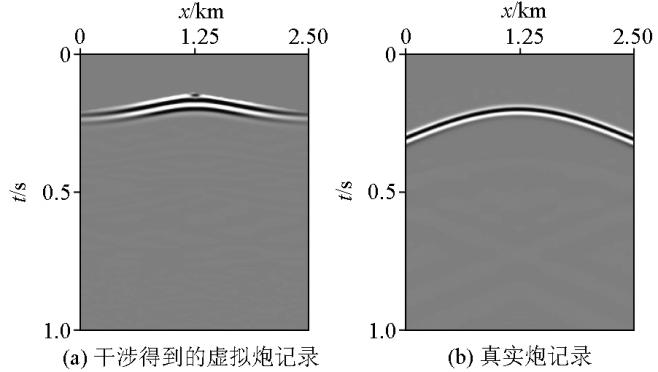
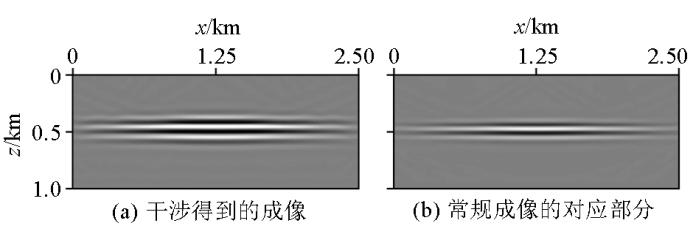
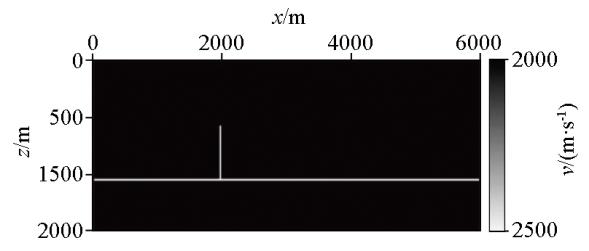
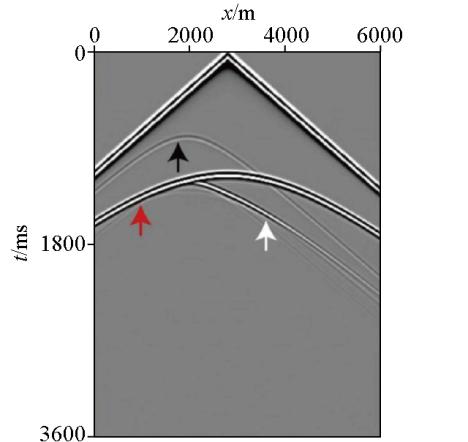
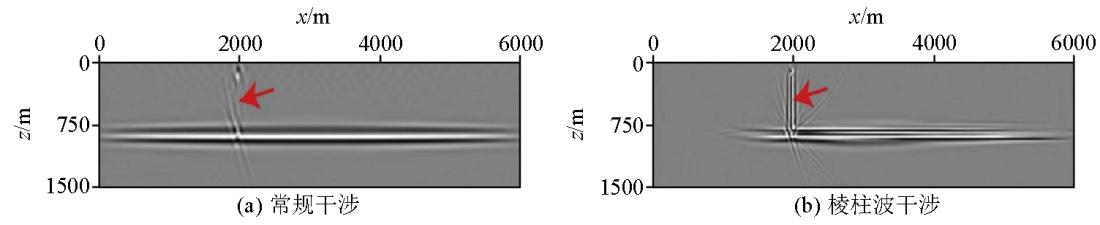
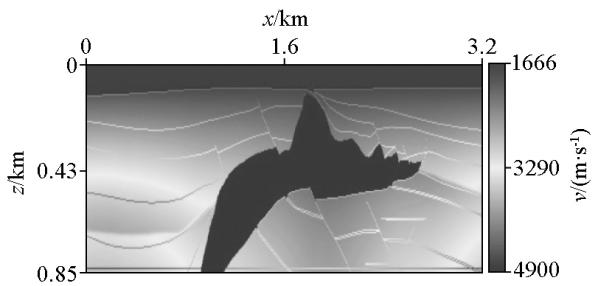
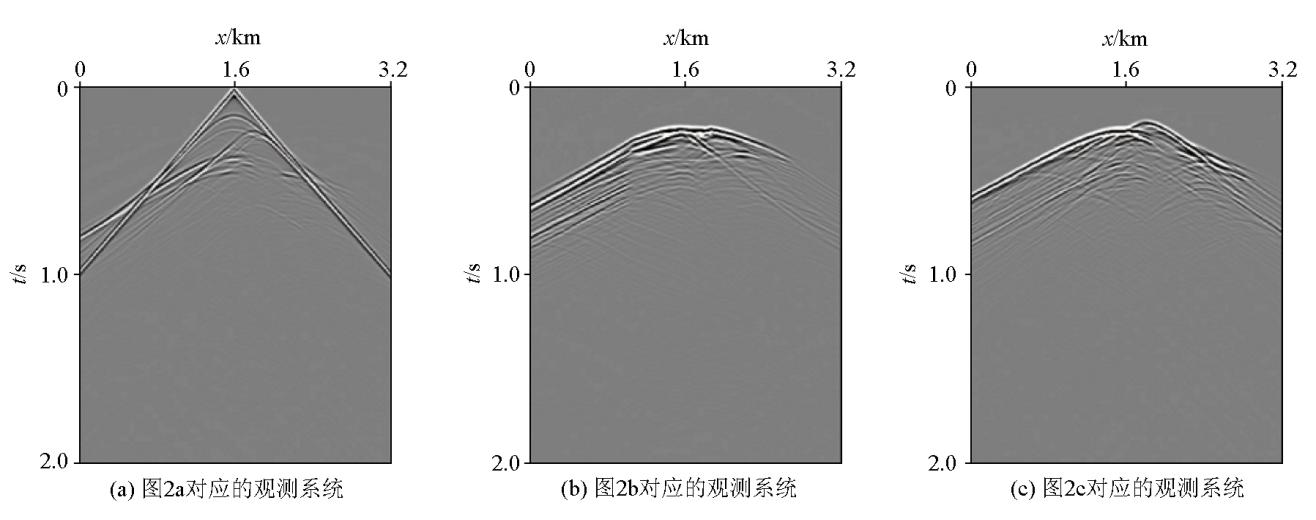
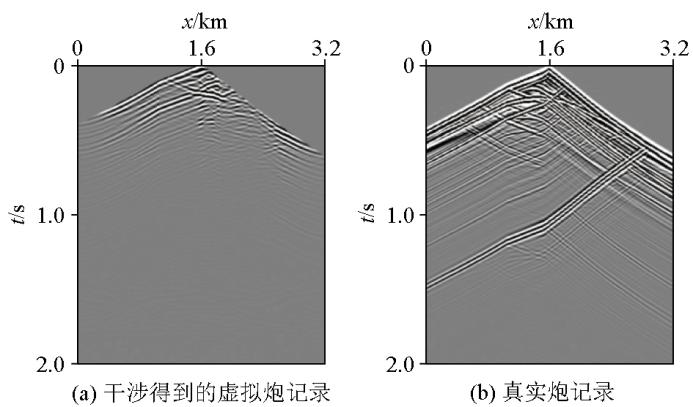
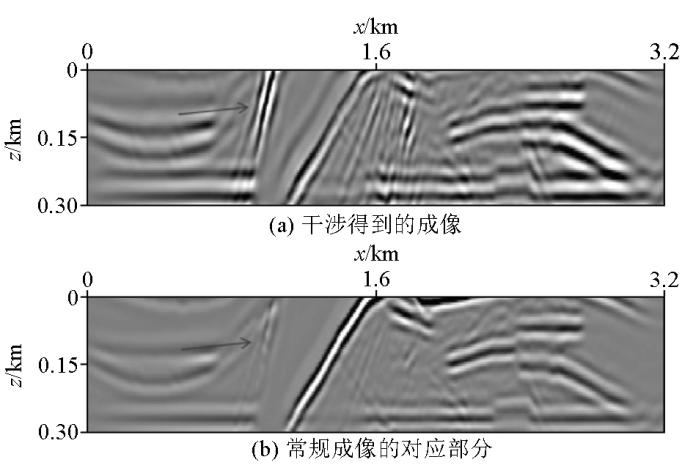
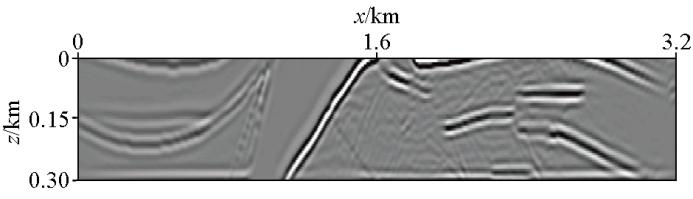
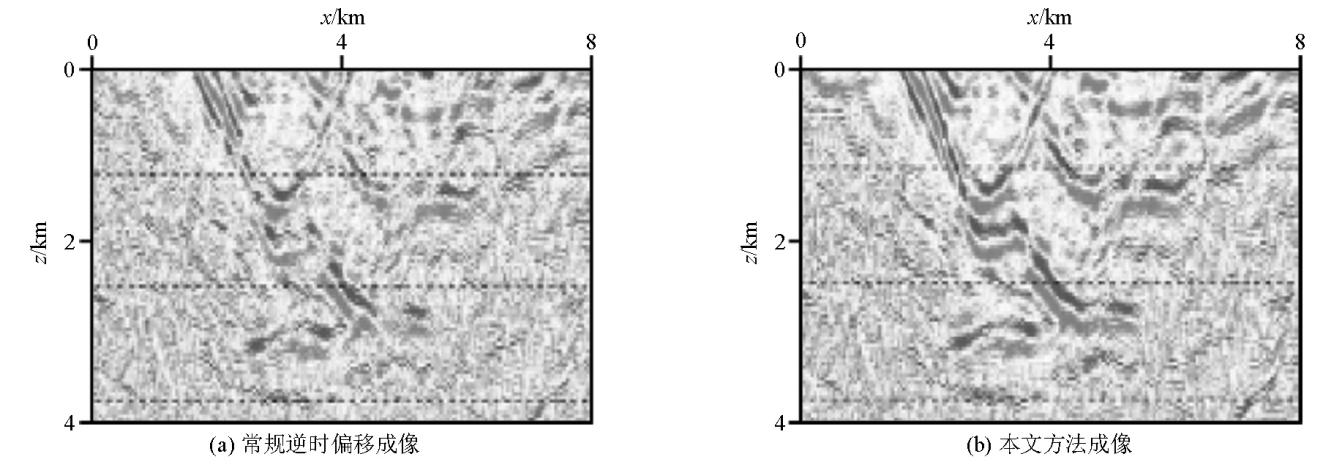
Conventional migration imaging,which only considers primary reflected waves,fails to effectively image subsurface high-steep geobodies.Compared to primary reflected waves,prismatic waves travel an additional path, enabling the imaging of high-steep structures.However,the additional travel path increases the computational load.Seismic interferometry can shift the surface observation system downward to an artificially selected subsurface calibration plane.Consequently,subsequent calculations only need to be performed on the model below the subsurface calibration plane,there by improving computational efficiency.Hence,this study proposed a novel imaging method integrating prismatic waves and seismic interferometry.In the proposed method,the acoustic wave equation was replaced by the prismatic wave equation.Virtual records were generated through cross-correlations between data from the surface and subsurface reference planes.These records were combined with reverse time migration(RTM) for imaging.The proposed method was verified using the horizontal layered, L-shaped, and salt dome models.Specifically,the horizontal layered model exhibited consistent imaging results with those below the global reference plane;the L-shaped model outperformed conventional methods in imaging steep structures;the salt dome model displayed enhanced pre-salt imaging resolution.Due to the downward shift of the surface observation system,the following imaging process entailed a reduced vertical depth and a shorter shot record time.The proposed method reduced the computational cost to 26.6% of that using the conventional RTM imaging.Overall,through the downward shift of the observation system and the utilization of multiples,the proposed method achieved both satisfactory accuracy and efficiency,overcoming the limitations of traditional interferometry and providing a novel solution for exploring high-steep structures.Notably,there still exist discrepancies between the simplified models and the actual heterogeneity,requiring further optimization of the computational cost.
罗宇晨, 罗章清, 刘胜, 欧成华, 王泽宇, 刘畅. 面向高陡构造的棱柱波地震干涉成像方法[J]. 物探与化探, 2025, 49(6): 1372-1379.
LUO Yu-Chen, LUO Zhang-Qing, LIU Sheng, OU Cheng-Hua, WANG Ze-Yu, LIU Chang. An imaging method integrating prismatic waves and seismic interferometry for high-steep structures. Geophysical and Geochemical Exploration, 2025, 49(6): 1372-1379.
Biondi B L, Clapp R G, Prucha M, et al. 3D prestack wave-equation imaging-a rapidly evolving technology[C]//Florence: 64th EAGE Conference & Exhibition, European Association of Geoscientists & Engineers, 2002:cp-5-00159.
[2]
Baysal E, Kosloff D D, Sherwood J W C. Reverse time migration[J]. Geophysics, 1983, 48(11):1514-1524.
doi: 10.1190/1.1441434
[3]
Loewenthal D, Mufti I R. Reversed time migration in spatial frequency domain[J]. Geophysics, 1983, 48(5):627-635.
doi: 10.1190/1.1441493
[4]
McMechan G A. Migration by extrapolation of time-dependent boundary VALUES[J]. Geophysical Prospecting, 1983, 31(3):413-420.
doi: 10.1111/gpr.1983.31.issue-3
[5]
Whitmore N D. Iterative depth migration by backward time propagation[C]// SEG Technical Program Expanded Abstracts 1983, Society of Exploration Geophysicists, 1983:382-385.
Beylkin G. Imaging of discontinuities in the inverse scattering problem by inversion of a causal generalized Radon transform[J]. Journal of Mathematical Physics, 1985, 26(1):99-108.
doi: 10.1063/1.526755
[8]
Hill N R. Gaussian beam migration[J]. Geophysics, 1990, 55(11):1416-1428.
doi: 10.1190/1.1442788
[9]
Gray S H, Bleistein N. True-amplitude Gaussian-beam migration[J]. Geophysics, 2009, 74(2):S11-S23.
doi: 10.1190/1.3052116
[10]
Claerbout J F. Imaging the Earth’s Interior[M]. Palo Alto: Blackwell Scientific Publishers, 1985.
[11]
Chang W F, McMechan G A. Reverse-time migration of offset vertical seismic profiling data using the excitation-time imaging condition[J]. Geophysics, 1986, 51(1):67-84.
doi: 10.1190/1.1442041
[12]
Chang W F, McMechan G A. 3D acoustic prestack reverse-time migration[J]. Geophysical Prospecting, 1990, 38(7):737-755.
doi: 10.1111/gpr.1990.38.issue-7
[13]
Berryhill J R. Wave-equation datuming[J]. Geophysics, 1979, 44(8):1329-1344.
doi: 10.1190/1.1441010
[14]
Berryhill J R. Wave equation datuming before stack[J]. Geophysics, 1984, 49(11):2064-2067.
doi: 10.1190/1.1441620
[15]
Wapenaar C P A, Cox H L H, Berkhout A J. Elastic redatuming of multicomponent seismic data[J]. Geophysical Prospecting, 1992, 40(4):465-482.
doi: 10.1111/gpr.1992.40.issue-4
[16]
Barrera P D F, Schleicher J, Neut J. Limitations of correlation-based redatuming methods[J]. Journal of Geophysics and Engineering, 2017, 14(6):1582-1598.
doi: 10.1088/1742-2140/aa83cb
[17]
Claerbout J F. Synthesis of a layered medium from its acoustic transmission response[J]. Geophysics, 1968, 33(2):264-269.
doi: 10.1190/1.1439927
[18]
Xiao X, Schuster G. Redatuming CDP data below salt with VSP Green's function[C]// New Orleans: SEG Annual International Meeting, Society of Exploration Geophysicists, 2006:3511-3515.
[19]
Schuster G T, Zhou M. A theoretical overview of model-based and correlation-based redatuming methods[J]. Geophysics, 2006, 71(4):SI103-SI110.
[20]
Dong S, Xiao X, Luo Y, et al. 3D target-oriented reverse-time datuming[C]// San Antonio: SEG Technical Program Expanded Abstracts, Society of Exploration Geophysicists, 2007:2442-2445.
[21]
Luo Y, Schuster G T. Bottom-up target-oriented reverse-time datuming[C]// Beijing: CPS/SEG International Geophysical Conference, CPS/SEG, 2004:482-485.
[22]
Lu R, Willis M, Campman X, et al. Redatuming through a salt canopy and target-oriented salt-flank imaging[J]. Geophysics, 2008, 73(3):S63-S71.
doi: 10.1190/1.2890704
[23]
Vander N J, Thorbecke J, Mehta K, et al. Controlled-source interferometric redatuming by crosscorrelation and multidimensional deconvolution in elastic media[J]. Geophysics, 2011, 76(4):SA63-SA76.
[24]
Curtis A, Halliday D. Source-receiver wave field interferometry[J]. Physical Review E, 2010, 81(4):046601.
doi: 10.1103/PhysRevE.81.046601
[25]
Poliannikov O V. Retrieving reflections by source-receiver wavefield interferometry[J]. Geophysics, 2011, 76(1):SA1-SA8.
[26]
Ruigrok E, Wapenaar K. Global-phase seismic interferometry unveils P-wave reflectivity below the Himalayas and Tibet[J]. Geophysical Research Letters, 2012, 39(11):L11301.
[27]
Tao Y, Sen M K. On a plane-wave based crosscorrelation-type seismic interferometry[J]. Geophysics, 2013, 78(4):Q35-Q44.
Mou X G, Zhou Q, Zhou X, et al. Research on an improved seismic interferometry algorithm with high-frequency extension[J]. Chinese Journal of Scientific Instrument, 2021, 42(4):59-66.
[29]
王一臣. 基于稳相理论及S变换的地震干涉法研究[D]. 北京: 中国地质大学(北京), 2021.
[29]
Wang Y C. Research on seismic interferometry based on stationary phase theory and S-transform[D]. Beijing: China University of Geosciences(Beijing), 2021.