Geochemical characteristics and utilization prospects of Zn in farmland soils, Jiangsu Province
WANG Zi-Yi1,2(), LIAO Qi-Lin1,2, WANG Yuan-Yuan1,2(), CUI Xiao-Dan1,2, LIU Wei-Jing1,2, XU Hong-Ting1,2, LI Wen-Ting1,2
Technology Innovation Center for Ecological Monitoring & Restoration Project on Land (Arable), Ministry of Natural Resources; Geological Survey of Jiangsu Province, Nanjing 210018, China
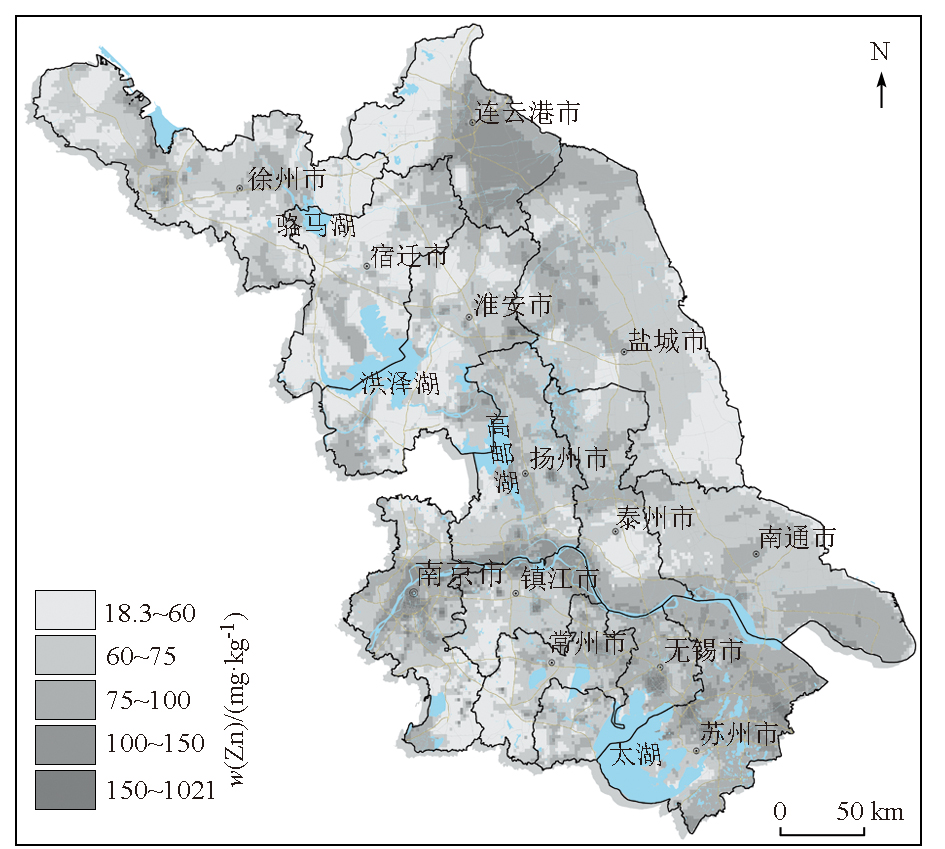
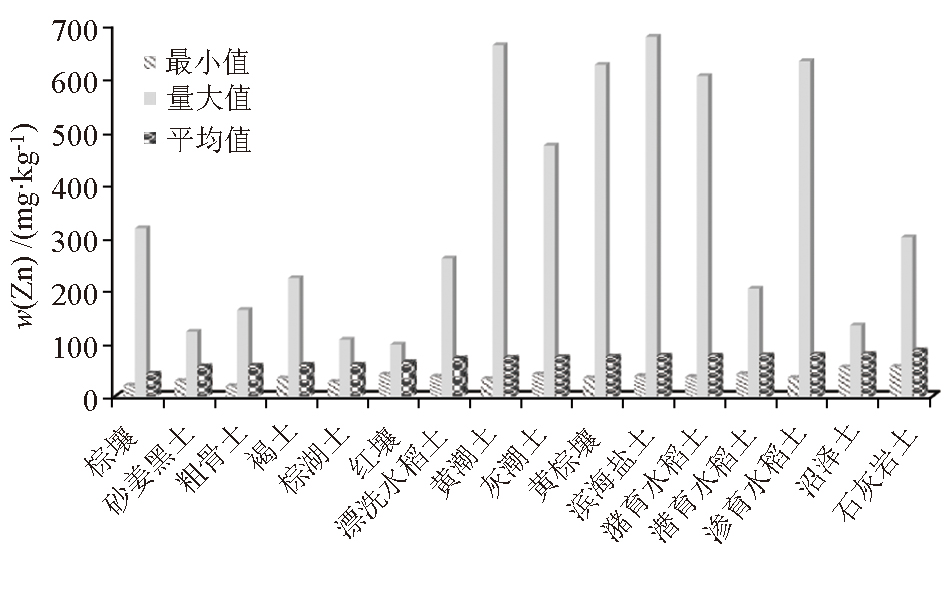
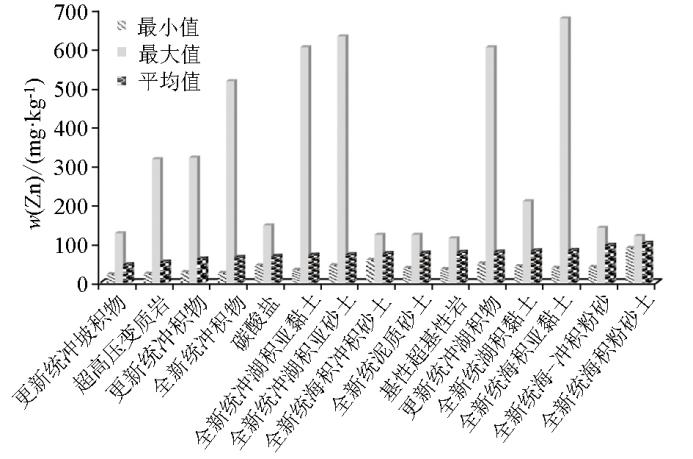
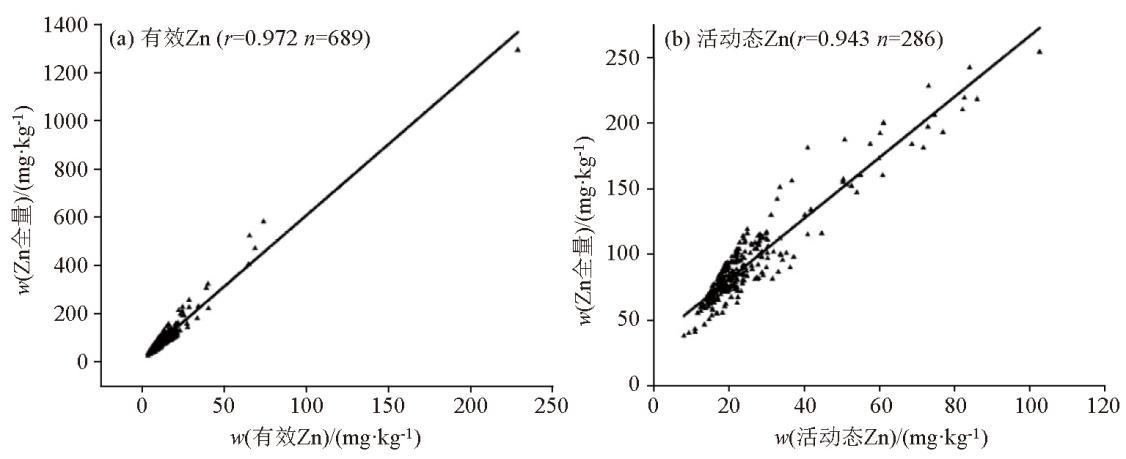
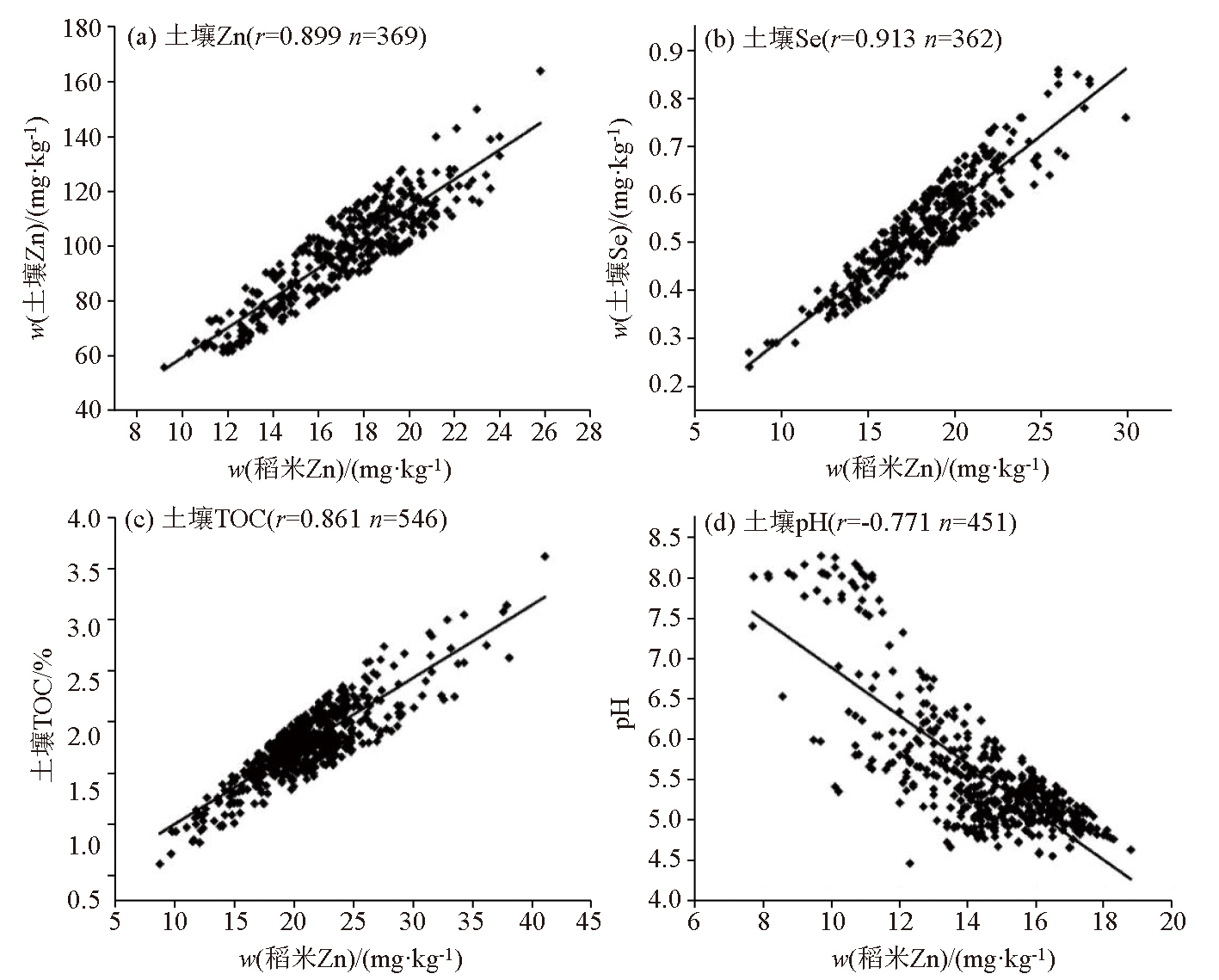
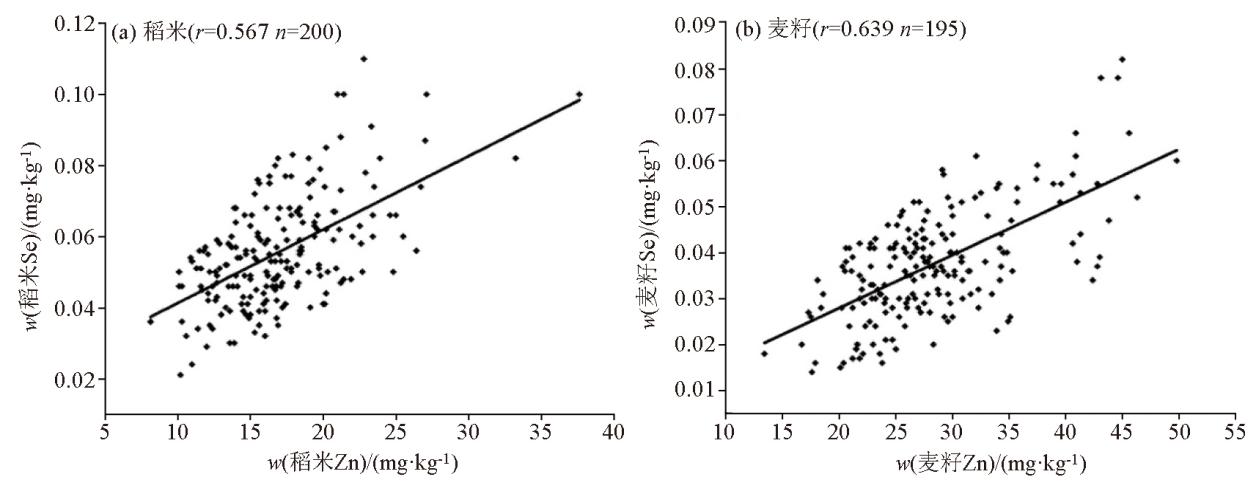
Based on the geochemical data of farmland soils in Jiangsu Province, obtained from regional eco-geochemical surveys and the geochemical assessment of land quality in past years, this study delved into the geochemical characteristics of Zn in soils, aiming to explore the prospects of producing natural zinc-rich food in Zn-rich soils. The results indicate that Zn in farmland soils in Jiangsu Province exhibited an uneven distribution, with an average Zn content of approximately 70 mg/kg. The available Zn accounted for about 20% of the total Zn in soils. The total Zn in soils dictated the distribution of available Zn, with a significant positive correlation between both. Significant factors influencing the enrichment and distribution of Zn in soils included soil texture, genetic type, total organic carbon (TOC) content, and Fe content. Among various soils, limestone soils were the most enriched in Zn in Jiangsu Province, while the Holocene marine silty soils served as soil parent materials most enriched in Zn. Zn in soils manifested (relatively) significant positive correlations with Se, Cu, Fe, Al, Mo, and TOC contents. Rice seeds showed an average Zn content of 18 mg/kg, with an average bio-concentration factor (BCF) value of 0.2. Zn in rice seeds was significantly positively correlated with Zn, Se, and TOC content in soils but significantly negatively correlated with soil pH. In contrast, wheat seeds showed an average Zn content of 28 mg/kg, with an average BCF value of 0.36. Zn in wheat seeds was significantly positively correlated with Zn, Se, B, and TOC content in soils. Additionally, a significant positive correlation between Zn and Se was observed in both rice and wheat seeds. According to the industrial standards, the proportions of zinc-rich soils, zinc-rich rice seeds, and zinc-rich wheat seeds in Jiangsu Province were 11.39%, 29%, and 13.69% respectively, suggesting promising prospects for the development and utilization of zinc-rich soil resources in Jiangsu Province. The development and utilization efficiency of zinc-rich soil resources can be significantly enhanced by combining the production of natural zinc-rich food and the amelioration of farmland soils (e.g., improving TOC content and pH in soils). Overall, the results of this study provide a basis for scientifically utilizing beneficial trace elements such as Zn in soils in Jiangsu Province.
汪子意, 廖启林, 汪媛媛, 崔晓丹, 刘玮晶, 徐宏婷, 李文婷. 江苏省土壤锌元素地球化学特征及其利用前景[J]. 物探与化探, 2025, 49(6): 1418-1429.
WANG Zi-Yi, LIAO Qi-Lin, WANG Yuan-Yuan, CUI Xiao-Dan, LIU Wei-Jing, XU Hong-Ting, LI Wen-Ting. Geochemical characteristics and utilization prospects of Zn in farmland soils, Jiangsu Province. Geophysical and Geochemical Exploration, 2025, 49(6): 1418-1429.
Zeng Q L, Yu T, Wang R. The influencing factors of selenium in soils and classifying the selenium-rich soil resources in the typical area of Enshi,Hubei[J]. Geoscience, 2018, 32(1):105-112.
Wang Z Q, Yang J F, Shi T C. A preliminary study of Se-rich soil in the Shizuishan aera,Ningxia and its potential for application[J]. Geophysical and Geochemical Exploration, 2023, 47(1):228-237.
Liao Q L, Huang S S, Xu W W, et al. Elemental geochemical characteristics and genetic mechanisms of Se-rich soils in the Lixiahe area in Jiangsu Province[J]. Geophysical and Geochemical Exploration, 2024, 48(4):1114-1124.
Zhang H W, Yang E L, Jiao S L, et al. Ge in soils of cultivated land in Qixingguan District:Geochemical characteristics and absorption by crops[J]. Geophysical and Geochemical Exploration, 2024, 48(2):534-544,554.
Wang X Y, Lin D X, Quan B B, et al. Geochemical characteristics,influencing factors and utilization prospect evaluation of ge in agricultural land soils in Wenzhou,Zhejiang Province[J]. Soils, 2023, 55 (2):409-418.
Tang Z M, Zhang X D, Mei L H, et al. Geochemical characteristics and bioavailability of selenium and zinc in soils in an area subjected to water and soil erosion :A case study of Changting County,Fujian Province[J]. Geophysical and Geochemical Exploration, 2024, 48(4):1125-1135.
Zhang Z H, Dai H M, Song Y H, et al. Geochemical characteristics of some soil trace elements in the Wuyuer River Basin,Heilongjiang Province[J]. Geophysical and Geochemical Exploration, 2022, 46(5):1097-1104.
Li P F, Guan H C, Wang X, et al. The distribution and influencing factors of zinc in the fluvo-aquic soil and the lime concretion black soil in northern Anhui Province[J]. Geophysical and Geochemical Exploration, 2022, 46(6):1545-1554.
She X, Wang Z H, Ma X L, et al. Variation of winter wheat grain zinc concentration and its relation to major soil characteristics in drylands of the loess plateau[J]. Scientia Agricultura Sinica, 2017, 50(22):4338-4349.
doi: 10.3864/j.issn.0578-1752.2017.22.010
Zhang L F, Xia W J, Zhang W X, et al. Effects of long-term application of pig manure and chemical fertilizers on soil Cu,Zn,and Cd contents and their availability in paddy soil[J]. Journal of Agro-Environment Science, 2022, 41(9):1944-1954.
Li Y F, Li J J, Xu J X, et al. Effects of copper and zinc contamination on soil nematode communities from natural woodland and farmland[J]. Acta Pedologica Sinica, 2020, 57(6):1492-1503.
[13]
Giráldez I, Fernández-Caliani J C, Rivera M B. Geochemical behavior and fate of trace elements in naturally contaminated soils under projected land-use changes[J]. Journal of Soils and Sediments, 2020, 20(3):1413-1423.
doi: 10.1007/s11368-019-02514-0
[14]
Bouis H E, Eozenou P, Rahman A. Food prices,household income,and resource allocation:Socioeconomic perspectives on their effects on dietary quality and nutritional status[J]. Food and Nutrition Bulletin, 2011, 32(S1):S14-S23.
doi: 10.1177/15648265110321S103
[15]
Ma G S, Jin Y, Li Y P, et al. Iron and zinc deficiencies in China:What is a feasible and cost-effective strategy?[J]. Public Health Nutrition, 2008, 11(6):632-638.
doi: 10.1017/S1368980007001085
Li X L, Zhang Y H, Xing H X, et al. Characteristics of delayed geochemical hazard (DGH) of Zn elements in soil in Hefei area[J]. Transactions of the CSAE, 2008, 24(5):42-45.
Zhao J, Shi H D, Wu X, et al. Study on spatial distribution of zinc in soils in Zunyi City,China[J]. Journal of Agricultural Resources and Environment, 2019, 36(3):298-303.
Xiao G Q, Zhao J, Chen Z W, et al. Delineation of areas with high geological background values of heavy metals in soils in Yunnan Province,China based on geological big data technology[J]. Geophysical and Geochemical Exploration, 2024, 48(1):216-227.
Liao Q L, Hua M, Jin Y, et al. A preliminary study of the distribution and pollution source of heavy metals in soils of Jiangsu Province[J]. Geology in China, 2009, 36(5):1163-1174.
Ministry of Land and Resources of the People’s Republic of China. Specification of multi-purpose regional geochemical survey(1∶250 000):DZ/T0258—2014[S]. Beijing: Standards Press of China, 2015.
Ministry of Land and Resources of the People’s Republic of China. Determinationoflandqualitygeochemicalevaluation:DZ/T0295—2016[S]. Beijing: Standards Press of China, 2016.
Liao Q L, Ren J H, Xu W W, et al. Geological and geochemical background of Se-rich rice production in Yili area,Jiangsu Province[J]. Geology in China, 2016, 43(5):1791-1802.
Liao Q L, Cui X D, Huang S S, et al. Element geochemistry of selenium-enriched soil and its main sources in Jiangsu Province[J]. Geology in China, 2020, 47(6):1813-1825.
Cui X D, Hua M, Huang S S, et al. Spatial distribution of surface soil selenium and its influential factors in a typical selenium-enriched area in Jiangsu Province,China[J]. Journal of Agro-Environment Science, 2023, 42(11):2472-2482.
Liu H M, Zhang X C, Su S H, et al. Available zinc content and related properties of main soil in the loess plateau[J]. Journal of Agricultural Resources and Environment, 2008, 27(3):898-902.
Lin L, Chen S B. Transformation and influence factors of speciation of zinc in soils and its effect on ainc bio-availability:A review[J]. Journal of Agro-Environment Science, 2012, 31(2):221-229.
Wang X M, Chai Z P, Mao D L. Characteristics of topsoil available trace elements with different textures[J]. Bulletin of Soil and Water Conservation, 2015, 35(2):189-192.
[31]
Ghoneim A. Effect of different methods of Zn application on rice growth,yield and nutrients dynamics in plant and soil[J]. Journal of Agriculture and Ecology Research International, 2016, 6(2):1-9.
Tan J, Liu X Y, Li Q, et al. Distribution of available zinc in tobacco-planting soils in Wenshan and its influential factors[J]. Soils, 2017, 49(4):719-724.
Yang S C, Huo L, Wang C B, et al. Correlation and path analyses of available zinc contents and salt ions in saline fluvo-aquic soil of Hexi Oasis Area[J]. Soils, 2017, 49(3):550-557.
[34]
Ramaiyan S, Vijayakumar P, Balasubramanian R A B, et al. Influence of nano-zinc oxide and fortified rice residue compost on rice productivity,zinc biofortification,zinc use efficiency,soil quality,zinc fractions and profitability in different rice production systems[J]. Journal of Plant Nutrition, 2023, 46(17):4063-4084.
doi: 10.1080/01904167.2023.2212722
Chu H X, Dang H Y, Wang T, et al. Evaluations and influencing factors of soil available Fe,Mn,Cu and Zn concentrations in major wheat production regions of China[J]. Acta Pedologica Sinica, 2024, 61(1):129-139.
General Administration of Quality Supervision,Inspection and Quarantine of the People’s Republic of China, Standardization Administration of the People’s Republic of China. Soil and sediment—Sequential extraction procedure of speciation of 13 trace elements: GB/T25282—2010[S]. Beijing: Standards Press of China, 2011.
[38]
Yang J, Liu C R, Wang R Z, et al. Unlocking Zn biofortification:Leveraging high-Zn wheat and rhizospheric microbiome interactions in high-pH soils[J]. Biology and Fertility of Soils, 2024, 60(7):969-985.
doi: 10.1007/s00374-024-01849-2
Li H, Huang Y, Zhang Q R, et al. Soil geochemical characteristics and influencing factors in Beijing Plain[J]. Geophysical and Geochemical Exploration, 2021, 45(2):502-516.
Zhou X N, Cao Y T, Ji Y. Element geochemical characteristics of weathering crust profiles of the Wenchuan section in the upper arid valley of the Minjiang River[J]. Geophysical and Geochemical Exploration, 2024, 48(3):597-608.
Li Q Y, Zhang Y H, Wei M H, et al. Spatial distribution of the soil trace elements in Hailun City[J]. Geophysical and Geochemical Exploration, 2022, 46(5):1114-1120.
Gao B M, Wu J M, Gao X B. Absorptive fixation and effective factors of zinc in soil[J]. Journal of Shandong Agricultural University, 1987, 18(2):25-32.
Zhang H M, Lyu J L, Xu M G, et al. Research progress on the influence of soil properties on zinc adsorption[J]. Journal of Northwest A & F University:Natural Science Edition, 2006, 34(5):114-118.
[44]
石璞, Chiahue Doua Yang, 赵鹏志. 间歇性降雨对土壤团聚体粒级及磷、铜、锌富集的影响[J]. 土壤学报, 2021, 58(4):948-956.
[44]
Shi P, Yang C D, Zhao P Z. Effect of intermittent rainfall on size distribution and phosphorus,copper and zinc enrichment of soil aggregates[J]. Acta Pedologica Sinica, 2021, 58(4):948-956.
Chen Y L, Jia Z, Shi J L, et al. Effect of straw return on diffusion,translocation and transformation of zinc in calcareous soil[J]. Acta Pedologica Sinica, 2018, 55(3):721-723.
Zhao X Y, Yang Z F, Cheng H Y, et al. Geochemical characteristics and ecological health related ranges of copper in soil in Huaying Mountain-Xicao in Linshui County,Sichuan Province[J]. Geophysical and Geochemical Exploration, 2022, 46(1):238-249.