Application of rapid infill-well optimization technology in fine-scale description of deep-water turbidite reservoirs in West Africa:A case study of the Bata oilfield
YUAN Shu-Jin(), LI Fa-You, LU Wen-Ming
Petroleum Exploration and Production Research Institute, SINOPEC, Beijing 102206, China
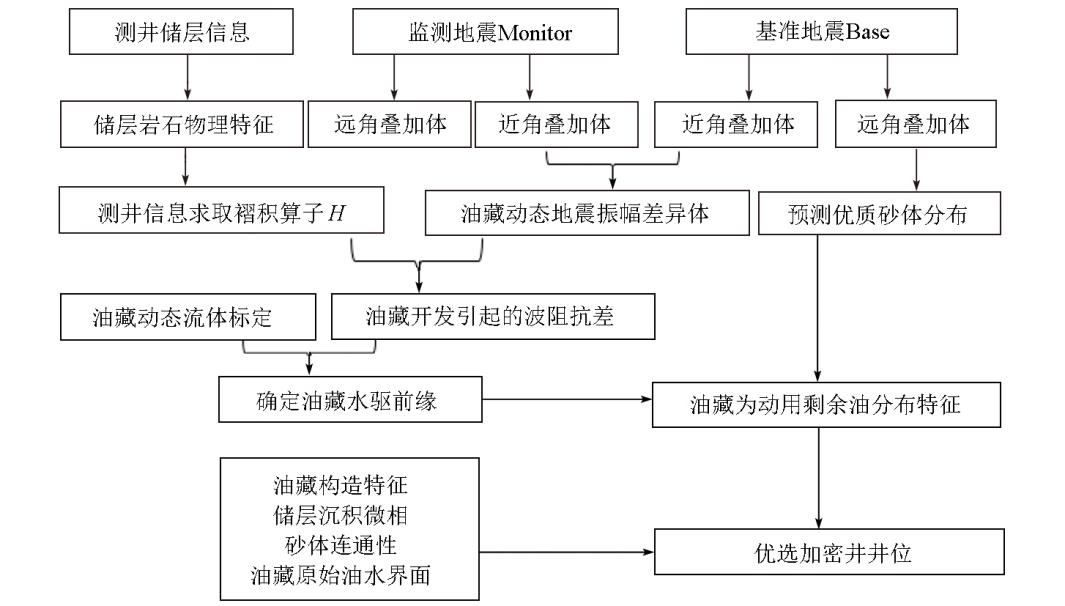
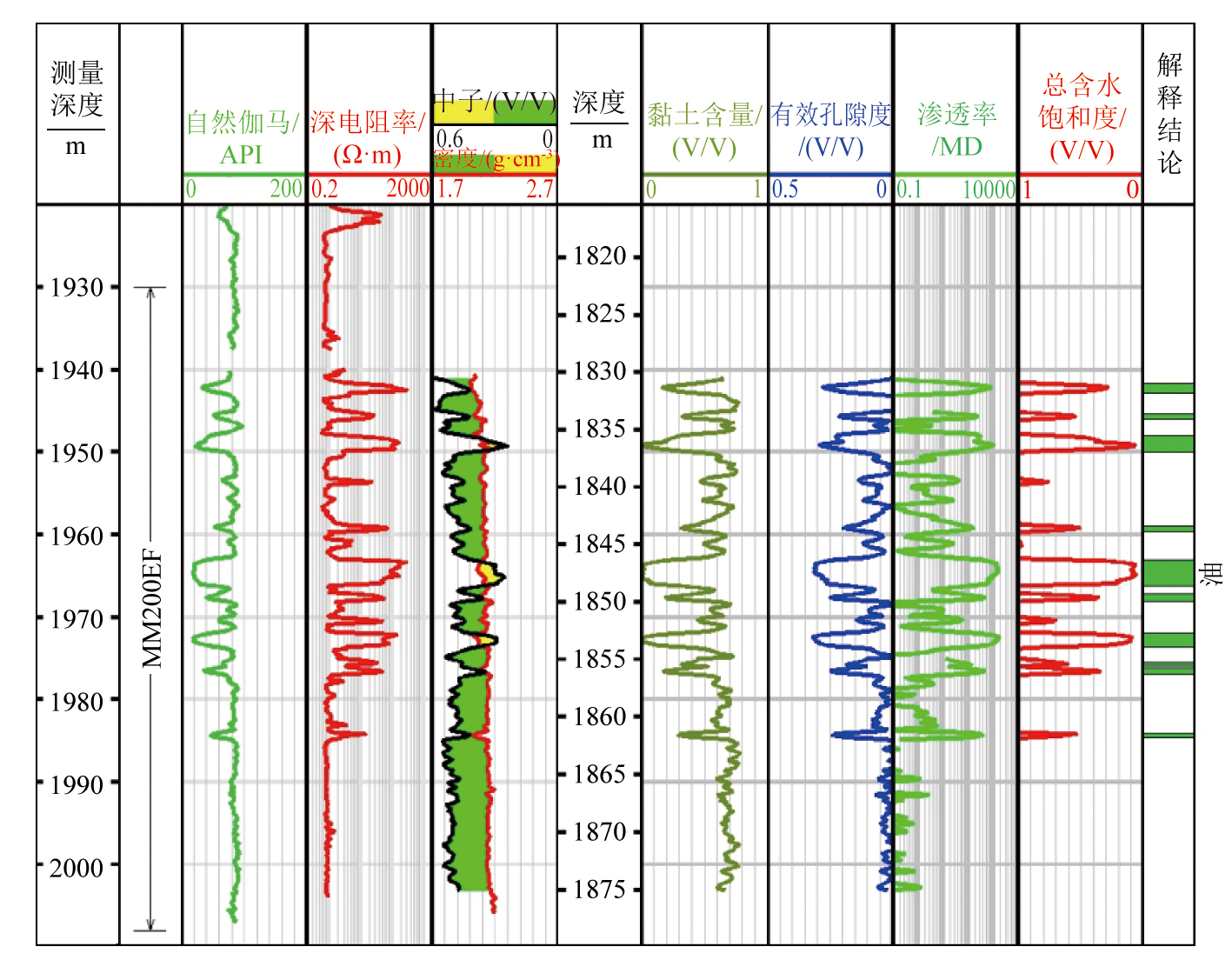
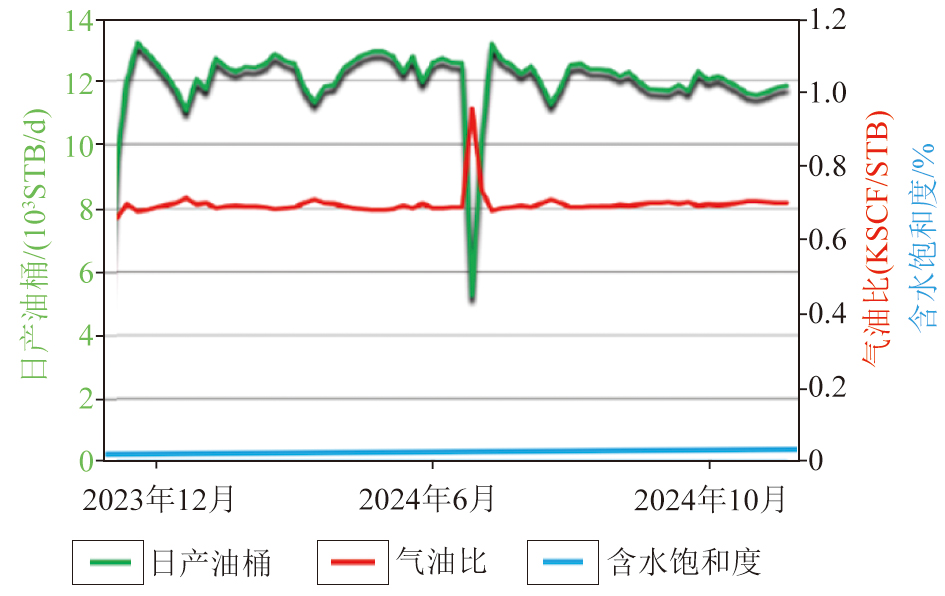
Differing from onshore oilfields,deep-water oilfields center their exploitation on economic efficiency, employing a strategy of achieving higher production via fewer wells while maintaining formation energy balance.Their exploitation plans are flexible and emphasize dynamic oilfield monitoring,allowing for adjustment and optimization during the exploitation,thereby achieving fast and efficient exploitation.Therefore,the placement of infill wells serves as a crucial step for stable production of deep-water oilfields in the middle and late exploitation stages.Considering oil reservoir characteristics and production well waterflooding,this study investigated the deep-water turbidite reservoirs in the Bata oilfield,West Africa.A rapid infill-well optimization plan was proposed based on a tectono-sedimentary study of the oil reservoirs.The proposed plan centers on predicting high-quality turbidite sand bodies using the prestack amplitude versus offset(AVO) attributes,identifying waterflooding fronts through time-lapse seismic surveys,performing a fine-scale description of turbidite sandstone reservoirs and predicting the distributions of residual oil in the reservoirs.The implementation of the proposed plan demonstrated satisfactory production performance.Specifically,the infill wells achieved daily crude oil production of 12,000 barrels,establishing them as a primary contributor to oilfield production.This result validates the effectiveness of rapid infill-well optimization technology.Overall,this study provides a significant reference for enhancing the oil recovery of deep-water reservoirs through the placement of infill wells for deep-water oilfields in the middle and late exploitation stages.
苑书金, 李发有, 陆文明. 加密井快速优化技术在西非深水浊积砂油藏精细描述中的应用——以Bata油田为例[J]. 物探与化探, 2025, 49(6): 1303-1310.
YUAN Shu-Jin, LI Fa-You, LU Wen-Ming. Application of rapid infill-well optimization technology in fine-scale description of deep-water turbidite reservoirs in West Africa:A case study of the Bata oilfield. Geophysical and Geochemical Exploration, 2025, 49(6): 1303-1310.
Wang Z, Chen C Y, Zhao L. Present situation and challenge of exploration and production for deep water oil and gas in the whole world[J]. Sino-Global Energy, 2010, 15(1):46-49.
Ding S W, Jiang H Q, Chen M F, et al. Development models of overseas deepwater oilfields[J]. Petroleum Geology & Oilfield Development in Daqing, 2013, 32(5):41-47.
Zhu Y H, Chen W H, Liao Y, et al. Key strategy and technology for efficient development of foreign deepwater oilfields[J]. Sino-Global Energy, 2017, 22(6):50-54.
Duan R K, Yang B Q, Gu W H, et al. Schemes and practice of high-efficiency deepwater oilfield development[J]. Petroleum Science and Technology Forum, 2019, 38(5):48-56,66.
Su Y C, Li T L. Practice of development adjustment in offshore sandstone oilfields in high water cut stage[J]. China Offshore Oil and Gas, 2016, 28(3):83-90.
Shang W, Zhang Y Y, Kong X W, et al. Turbidite reservoir identification technology based on prestack multi-parameter sensitivity factor fusion[J]. Geophysical and Geochemical Exploration, 2022, 46(4):904-913.
Gao Y F, Wang Z J, Li X X, et al. Time-lapsed seismic matching processing technology for multi-reservoir[J]. Geophysical and Geochemical Exploration, 2019, 43(1):183-188.
Lyu A M, Long L, Yao J, et al. New exploration on optimization method of encryption area in offshore oilfield[J]. Journal of Oil and Gas Technology, 2012, 34(4):126-130,135.
Gao Y H, Jiang B, Zhang Y C, et al. Evaluation method for infill well productivity of multi-layer reservoirs in old offshore oilfields:A case of Block N in Bohai A Oilfield[J]. Petroleum Geology and Recovery Efficiency, 2021, 28(4):120-130.
Rui Y J, Shang X M. Exploration and practice of non-uniform time-lapse seismic key technology in Shengli Oilfield[J]. Geophysical and Geochemical Exploration, 2021, 45(6):1439-1447.
Jin Y, Tang E G, Zhang J, et al. Study on limit well pattern density of polymer flooding in offshore oilfield:A case study of Oilfield S in Bohai Bay[J]. Complex Hydrocarbon Reservoirs, 2022, 15(3):84-90.
Qi Y, Peng J, Liu P, et al. Seismic microfacies analysis technique:A case study of lobes of submarine fan in a deep water oilfield[J]. Geophysical and Geochemical Exploration, 2018, 42(1):154-160.
Gu W H. The method for the identification of remaining movable reserve in the middle and later period of development of deepwater oilfield[J]. Journal of Chongqing University of Science and Technology:Natural Sciences Edition, 2018, 20(5):17-21,27.
[17]
Shuey R T. A simplication of the Zoeppritz eqations[J]. Geophysics, 1985, 50(4):609-614.
doi: 10.1190/1.1441936
[18]
Hilterman F J. Is AVO the seismic signature of lithology? A case history of Ship Shoal-South addition[J]. The Leading Edge, 1990, 9(6):15-22.
doi: 10.1190/1.1439744
Su Y C. A set of techniques to describe quantitatively remaining oil in offshore heavy oilfields under commingling production in large well spacing[J]. China Offshore Oil and Gas, 2012, 24(S1):82-85.
Liu C, Zhao C M, Liao X W, et al. A refined anatomy of the internal structure of meandering river reservoirs under large well spacing in offshore oilfields and its application[J]. China Offshore Oil and Gas, 2014, 26(1):58-64.
Chen X, Yang X P, Xiao P, et al. Application of time-lapse seismic technology in deepwater turbidite reservoir monitoring:A case study of the Deepwater Fan A oilfield in West Africa[J]. Geophysical Prospecting for Petroleum, 2023, 62(3):538-547.
doi: 10.12431/issn.1000-1441.2023.62.03.015
Chen Z H, Yuan S J, Sun Y, et al. Performances of deepwater turbidite oil reservoirs monitored by 4d seismic survey[J]. Petroleum Geology & Oilfield Development in Daqing, 2015, 34(5):127-130.