Please wait a minute...
E-mail Alert Rss
 
物探与化探  2025, Vol. 49 Issue (6): 1411-1417    DOI: 10.11720/wtyht.2025.1370
  方法研究信息处理仪器研制 本期目录 | 过刊浏览 | 高级检索 |
基于矿产资源利用现状动态信息的储量预测方法
杨培()
广东省矿产资源储量评审中心, 广东 广州 510080
Reserve prediction method based on the dynamic information on the utilization status of mineral resources
YANG Pei()
Guangdong Mineral Resource Reserves Evaluation Center, Guangzhou 510080, China
全文: PDF(3159 KB)   HTML
输出: BibTeX | EndNote (RIS)      
摘要 

由于矿产资源数据具有动态性和多维性,使得矿产资源利用现状的信息难以准确反映实际利用情况,进而导致矿产资源量预测结果不准确。为此,本研究提出基于矿产资源利用现状动态信息的储量预测方法,对矿产资源勘查数据进行格式转换和编码处理,并将其输入到GIS系统中,利用GIS技术将数据划分为空间数据和属性数据,由此确立资源利用现状管理体系,引入全关系型数据库实现对矿产资源利用现状的管理。然后,结合地质三维模型计算成矿有利度,从而圈定成矿靶区,以此为依据,构建品位—吨位模型,并采用统计取样理论预测矿区资源储量。实验结果表明,应用该方法预测的矿产储量与实际储量相一致,说明该方法预测准确度相对较高。

服务
把本文推荐给朋友
加入引用管理器
E-mail Alert
RSS
作者相关文章
杨培
关键词 矿产资源资源信息管理储量预测地质模型数据库    
Abstract

Due to the dynamic and multidimensional properties of mineral resource data, the information on the utilization status of mineral resources fails to accurately reflect the actual utilization status of mineral resources, leading to inaccurate predictions of mineral resources. Therefore, this study proposed a reserve prediction method based on the dynamic information on the utilization status of mineral resources. The exploration data of mineral resources, subjected to format conversion and encoding, were input into the geographic information system (GIS). They were categorized by the GIS into spatial and attribute data, thereby establishing a resource utilization status management system. A fully relational database was introduced to manage the utilization status of mineral resources. A 3D geological model was employed to calculate the ore-forming favorability and delineate the mineralization target area. Based on this, a grade-tonnage model was constructed. Finally, the statistical sampling theory was applied to predict the resource reserves in the mining area. The experimental results demonstrate that the mineral reserves predicted using the proposed method aligned with the actual reserves, indicating a relatively high prediction accuracy.

Key wordsmineral resources    resource information management    reserve prediction    geological model    database
收稿日期: 2024-09-09      修回日期: 2025-03-25      出版日期: 2025-12-20
ZTFLH:  F407.1  
  P631  
基金资助:广东省智慧自然资源—矿产资源储量监测管理服务项目(粤政数函[2022]59号);2020年度广东省自然资源事务专项“储量动态监测”项目(粤自然资矿管[2020]3号)
引用本文:   
杨培. 基于矿产资源利用现状动态信息的储量预测方法[J]. 物探与化探, 2025, 49(6): 1411-1417.
YANG Pei. Reserve prediction method based on the dynamic information on the utilization status of mineral resources. Geophysical and Geochemical Exploration, 2025, 49(6): 1411-1417.
链接本文:  
https://www.wutanyuhuatan.com/CN/10.11720/wtyht.2025.1370      或      https://www.wutanyuhuatan.com/CN/Y2025/V49/I6/1411
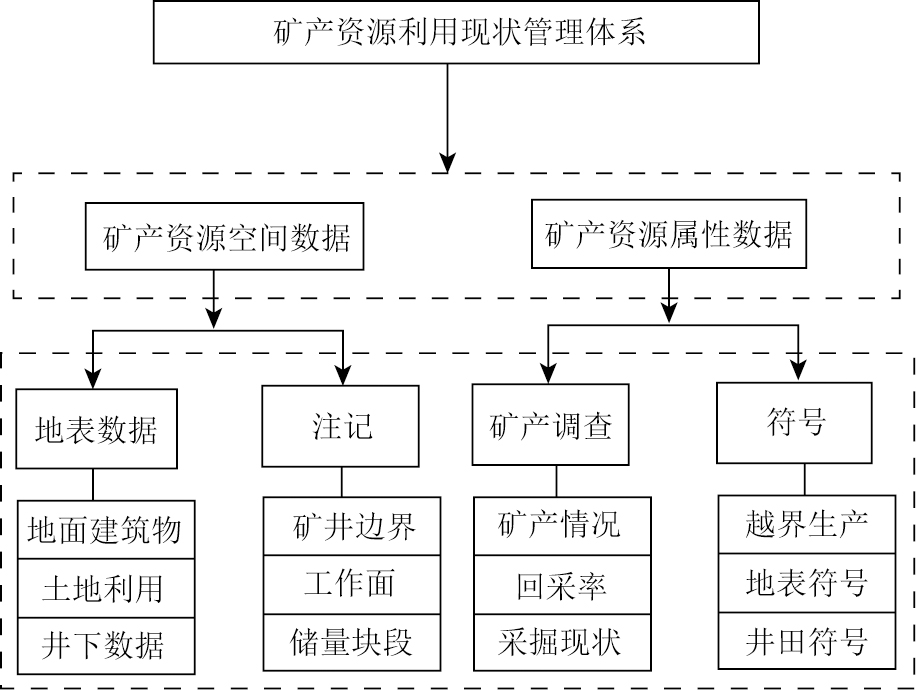
Fig.1  矿产资源利用现状管理体系
数据类型 字段名称 字段类型 字段长度
空间数据 矿产名称 VARCHAR 255
地理位置 VARCHAR 4
品位 DECIMAL 255
开发利用现状 VARCHAR 100
勘查时间 DATE -
坐标系统 VARCHAR 50
形态描述 TEXT -
属性数据 矿区范围 VARCHAR 50
开采期限 DATE 18
已开采量 DECIMAL 2
地质情况 TEXT 100
矿产资源ID INT 200
矿种 VARCHAR 100
倾向 DECIMAL 10
平均厚度 DECIMAL 10
Table 1  管理数据库
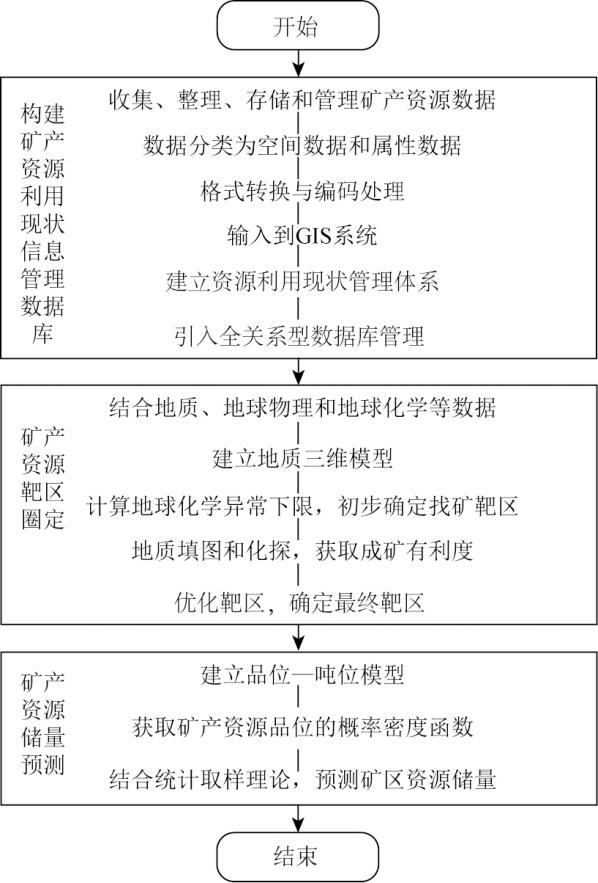
Fig.2  储量预测流程
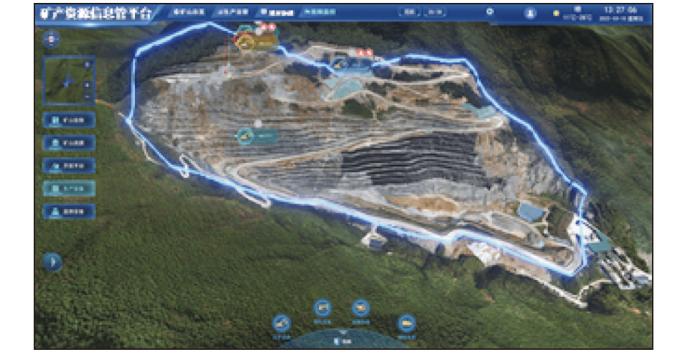
Fig.3  矿产资源信息管理预测软件系统界面示例
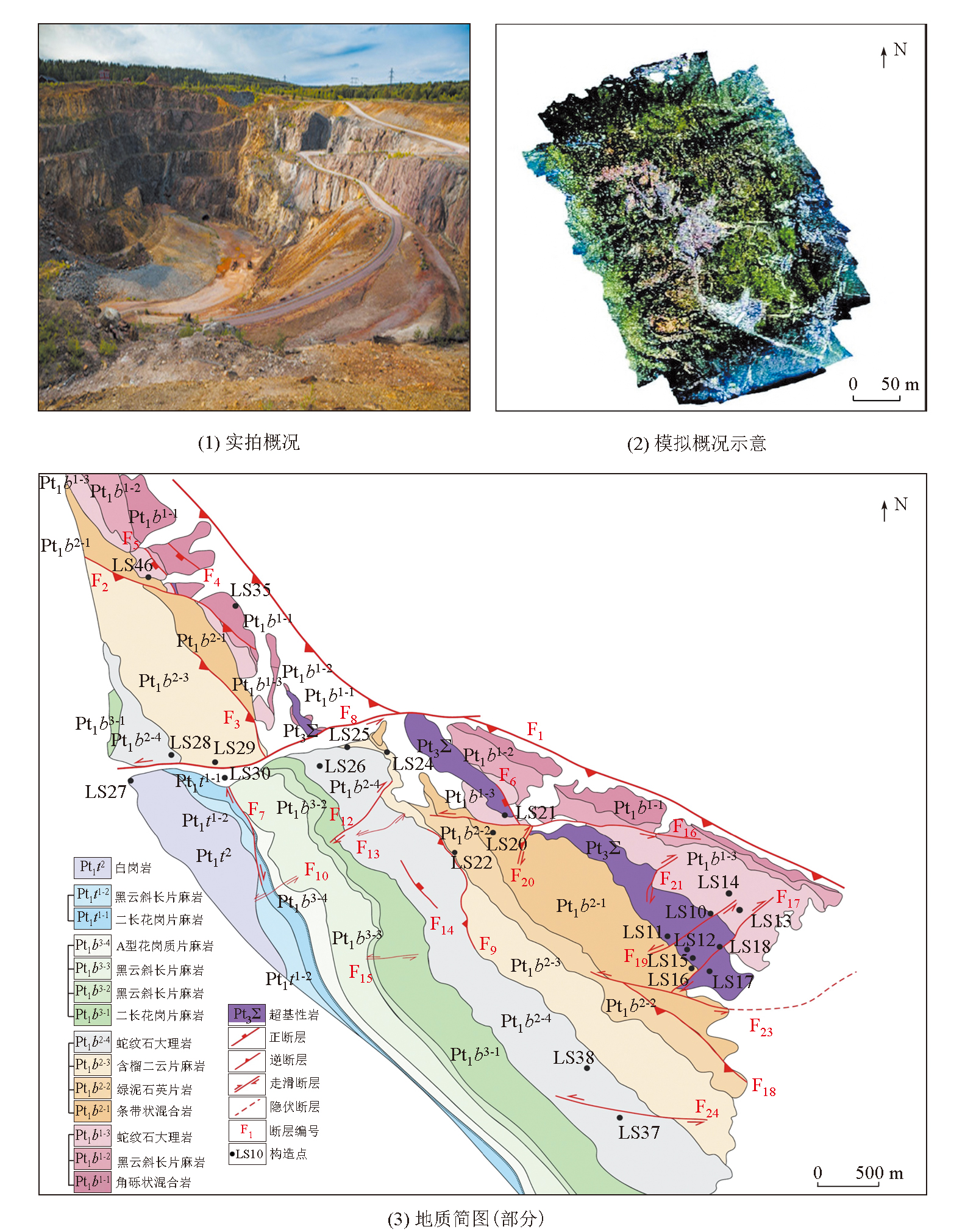
Fig.4  研究区矿产资源开发利用概况
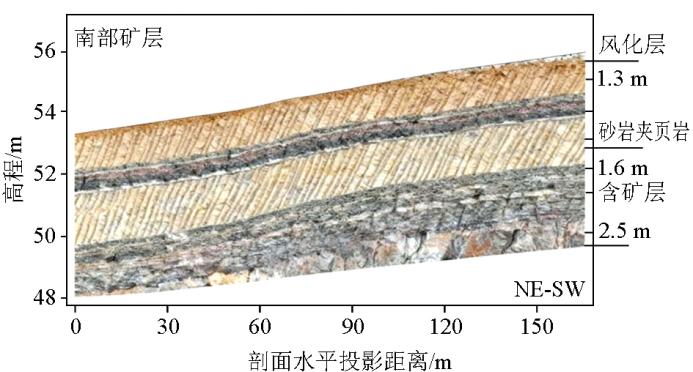
Fig.5  研究区域南部矿层剖面
序号 项目 描述
1 矿产资源类型 片麻岩(含少量花岗岩等)
2 已开采量/t 1.32
3 利用率/% 85
4 年开采量/t 11.2
5 主要矿体特征 矿品位高,易于开采
6 回采率/% 70
7 开采期限/年 45
Table 2  研究区域矿产资源开发利用信息
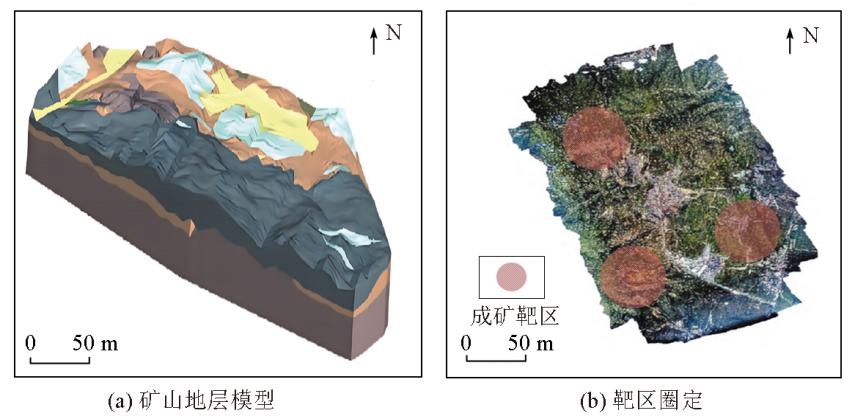
Fig.6  地质三维模型和矿区靶区圈定
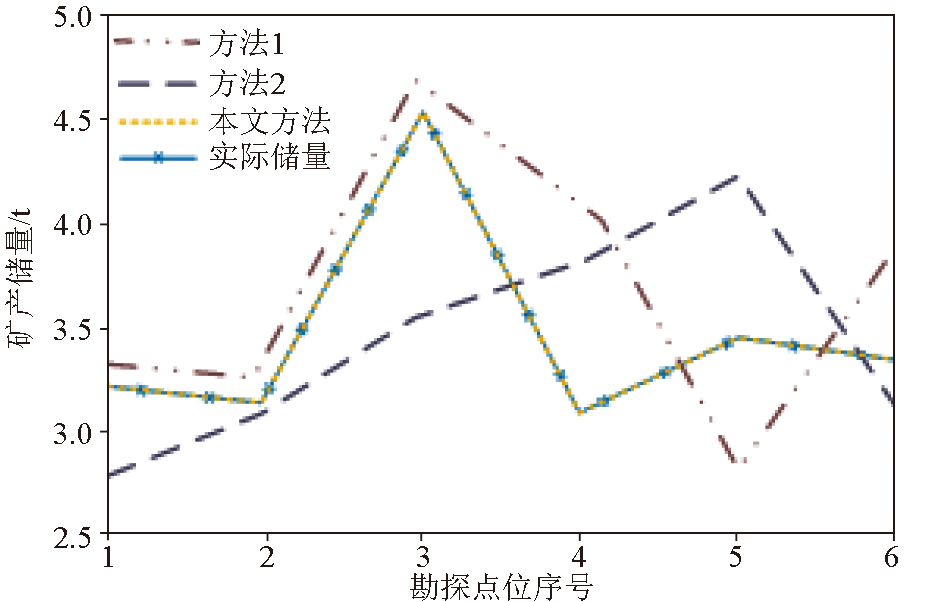
Fig.7  矿产资源储量预测结果
块段品位/% 稳定裕度
方法1 方法2 本文方法
0.1 0.54 0.66 0.87
0.2 0.57 0.75 0.92
0.3 0.49 0.80 0.85
0.4 0.66 0.57 0.90
0.5 0.70 0.63 0.88
0.6 0.69 0.58 0.97
0.7 0.57 0.75 0.95
0.8 0.40 0.81 0.92
0.9 0.55 0.69 0.94
1.0 0.47 0.77 0.99
Table 3  3种方法预测结果对比
[1] 叶育鑫, 刘家文, 曾婉馨, 等. 基于本体指导的矿产预测知识图谱构建研究[J]. 地学前缘, 2024, 31(4):16-25.
[1] Ye Y X, Liu J W, Zeng W X, et al. Ontology-guided knowledge graph construction for mineral prediction[J]. Earth Science Frontiers, 2024, 31(4):16-25.
[2] 王成彬, 王明果, 王博, 等. 融合知识图谱的矿产资源定量预测[J]. 地学前缘, 2024, 31(4):26-36.
[2] Wang C B, Wang M G, Wang B, et al. Knowledge graph-infused quantitative mineral resource forecasting[J]. Earth Science Frontiers, 2024, 31(4):26-36.
[3] Ding K, Xue L F, Ran X J, et al. Siamese network based prospecting prediction method:A case study from the Au deposit in the Chongli mineral concentrate area in Zhangjiakou,Hebei Province,China[J]. Ore Geology Reviews, 2022, 148:105024.
[4] 郑孝诚, 张明华, 任伟. 卷积神经网络在山东金矿勘查预测中的应用[J]. 物探与化探, 2023, 47(6):1433-1440.
[4] Zheng X C, Zhang M H, Ren W. Application of convolution neural networks in gold exploration and prediction in Shandong Province[J]. Geophysical and Geochemical Exploration, 2023, 47(6):1433-1440.
[5] Babii K, Kratkovskyi I, Kuantay A. Prediction of the mineral components spatial distribution in tailings ferruginous quartzite enrichments[J]. IOP Publishing Ltd., 2023, 47 (23):147-152.
[6] 曾小龙, 李谦, 魏宏超, 等. 基于南海巨厚塑性泥岩地层特征的钻速预测模型[J]. 煤田地质与勘探, 2023, 51 (11):159-168.
[6] Zeng X L, Li Q, Wei H C, et al. Drilling rate prediction model based on the characteristics of thick plastic mudstone strata in the South China Sea[J]. Coal Geology and Exploration, 2023, 51(11):159-168.
[7] 李凤廷, 苗虎林, 付佳, 等. 那陵郭勒河下游重磁异常与铁多金属矿找矿预测[J]. 西北地质, 2023, 56 (6):155-165.
[7] Li F T, Miao H L, Fu J, et al. Gravity and magnetic anomalies in the lower reaches of the Nalingguo River and prospecting prediction of iron polymetallic deposits[J]. Northwest Geology, 2023, 56(6):155-165.
[8] 丁培超, 郭勤强, 刘玉刚, 等. 河南嵩县庙岭金矿矿体赋存规律及深部找矿预测[J]. 地质通报, 2023, 42 (6):953-965.
[8] Ding P C, Guo Q Q, Liu Y G, et al. Ore body occurrence pattern and deep prospecting prediction of Miaoling gold mine in Song County,Henan Province[J]. Geological Bulletin of China, 2023, 42(6):953-965.
[9] 王岩, 王登红, 秦锦华, 等. 南岭东段区域成矿规律与成矿预测[J]. 地质学报, 2023, 97(4):1315-1328.
[9] Wang Y, Wang D H, Qin J H, et al. Regional metallogenic regularity and metallogenic prediction in the eastern Nanling[J]. Acta Geologica Sinica, 2023, 97(4):1315-1328.
[10] 柳炳利, 谢淼, 孔韫辉, 等. 基于卷积自编码网络的夏河—合作地区金矿定量预测[J]. 地球学报, 2023, 44 (5):877-886.
[10] Liu B L, Xie M, Kong Y H, et al. Quantitative prediction of gold mines in Xiahe-Hezuo area based on convolutional autoencoder network[J]. Acta Geologica Sinica, 2023, 44(5):877-886.
[11] 姬果, 裴中朝, 王永辉, 等. 河南省石墨矿床地质特征、成矿区带划分及找矿预测[J]. 金属矿山, 2023(4):158-167.
[11] Ji G, Pei Z C, Wang Y H, et al. Geological characteristics,metallogenic zone division and prospecting prediction of graphite deposits in Henan Province[J]. Metal Mine, 2023(4):158-167.
[12] 庞振山, 薛建玲, 程志中, 等. 成矿地质体找矿预测理论与方法在矿产勘查中的应用[J]. 地质通报, 2023, 42 (6):883-894.
[12] Pang Z S, Xue J L, Cheng Z Z, et al. Application of prospecting prediction theory and method of ore-forming geological bodies in mineral exploration[J]. Geological Bulletin of China, 2023, 42(6):883-894.
[13] Yang N, Zhang Z, Yang J, et al. Applications of data augmentation in mineral prospectivity prediction based on convolutional neural networks[J]. Computers & Geosciences, 2023, 47 (10):154-155.
[14] 罗杰, 周仲礼, 邹天一, 等. 基于PSO-CNN的深部找矿预测模型构建[J]. 成都理工大学学报:自然科学版, 2022, 49(6):697-708.
[14] Luo J, Zhou Z L, Zou T Y, et al. Construction of deep mineral exploration prediction model based on PSO-CNN[J]. Journal of Chengdu University of Technology:Natural Science Edition, 2022, 49(6):697-708.
[15] 张磊, 王万银, 汪孝博, 等. 基于重磁场特征的洛宁地区构造特征研究及矿产预测[J]. 物探与化探, 2023, 47(3):608-617.
[15] Zhang L, Wang W Y, Wang X B, et al. Research on tectonic characteristics and mineral prediction of Luoning area based on gravity and magnetic field characteristics[J]. Geophysical and Geochemical Exploration, 2023, 47(3):608-617.
[1] 卢星辰, 邢倩, 许勇, 吕国森, 陈祥忠, 王瑞兴, 黄申硕. 基于大地电磁的南宫地热田地热资源赋存特征[J]. 物探与化探, 2025, 49(3): 559-568.
[2] 孙栋华, 陈伟, 程莎莎, 石连成, 张俊伟, 祁平, 杨玉勤. 砂岩型铀矿勘查多元地学信息三维地质建模技术研究[J]. 物探与化探, 2025, 49(3): 631-641.
[3] 张冕, 张春灌, 赵敏, 钟振华, 袁炳强, 周磊, 韩梅. 地球磁异常EMAG2v3与全球重力数据库V29数据质量综合评估——以北极地区Aegir脊为例[J]. 物探与化探, 2023, 47(6): 1410-1416.
[4] 肖关华, 张伟, 陈恒春, 卓武, 王艳君, 任丽莹. 浅层地震技术在济南地下空间探测中的应用[J]. 物探与化探, 2022, 46(1): 96-103.
[5] 王光文, 王海燕, 李洪强, 李文辉, 庞永香. 地震正演技术在深反射地震剖面探测中的应用[J]. 物探与化探, 2021, 45(4): 970-980.
[6] 朱云起, 李帝铨, 王金海. 基于MySQL的广域电磁法数据处理与解释软件[J]. 物探与化探, 2021, 45(4): 1030-1036.
[7] 李靖, 王林飞, 闫浩飞. 基于Oracle数据库的航磁异常自动渲染技术[J]. 物探与化探, 2020, 44(1): 179-184.
[8] 熊业刚, 罗铮, 张启全, 王海峰, 李祥, 朱波, 王振强. 逆掩断裂带正演分析与解释——以英雄岭地区为例[J]. 物探与化探, 2019, 43(3): 551-557.
[9] 张崇山, 韩亚彬. 基于数据库的地球化学异常特征参数计算方法[J]. 物探与化探, 2019, 43(1): 148-152.
[10] 孙忠军, 方慧, 刘建勋, 张舜尧. 祁连山冻土区三露天天然气水合物矿藏勘查模型[J]. 物探与化探, 2017, 41(6): 998-1004.
[11] 肖云飞, 殷厚成. 基于溶洞体照明分析的采集参数论证[J]. 物探与化探, 2017, 41(2): 270-277.
[12] 朱威, 王大勇, 刘桂芹, 王书民, 王刚, 姚大为, 张振宇. 基于地球物理资料的九瑞矿集区三维地质模型分析[J]. 物探与化探, 2015, 39(5): 915-922.
[13] 周旋, 金瑜, 许春梅. 基于三维地质建模的点元法重力正演——以某大型铁矿为例[J]. 物探与化探, 2015, 39(3): 490-495.
[14] 邵平安. 河南省区域岩石密度背景参考值统计特征[J]. 物探与化探, 2014, 38(1): 71-74,80.
[15] 潘和平. 井中激发极化法在矿产资源勘探中的作用[J]. 物探与化探, 2013, 37(4): 620-626.
Viewed
Full text


Abstract

Cited

  Shared   
  Discussed   
京ICP备05055290号-3
版权所有 © 2021《物探与化探》编辑部
通讯地址:北京市学院路29号航遥中心 邮编:100083
电话:010-62060192;62060193 E-mail:whtbjb@sina.com , whtbjb@163.com