Please wait a minute...
E-mail Alert Rss
 
物探与化探  2025, Vol. 49 Issue (6): 1430-1439    DOI: 10.11720/wtyht.2025.0057
  生态地质调查 本期目录 | 过刊浏览 | 高级检索 |
洮南地区浅层地表基质地球化学特征及盐碱化响应机制
斯琴毕力格(), 孔繁鹏(), 刘洪博, 张磊, 张也, 董凯
中国地质调查局 牡丹江自然资源综合调查中心, 吉林 长春 130102
Geochemical characteristics and salinization mechanisms of shallow surface substrate in the Taonan area, western Songnen Plain
Siqinbilige (), KONG Fan-Peng(), LIU Hong-Bo, ZHANG Lei, ZHANG Ye, DONG Kai
Mudanjiang Natural Resources Comprehensive Survey Center, China Geological Survey, Changchun 130102, China
全文: PDF(3529 KB)   HTML
输出: BibTeX | EndNote (RIS)      
摘要 选取松嫩平原西部洮南地区为研究对象,通过地表基质调查工作,揭示了浅层地表基质层中表层土壤(0~20 cm)和深层土壤(150~200 cm)的元素分异特征及盐渍化成因机制。结果表明:①与深层土壤相比较,研究区表层土壤中Corg、N等指标呈现强富集,而Br、P、S、Se、TC等呈轻微富集,重金属元素、稀土元素及其他微量元素无明显差异,表明农业耕作活动、生物地球化学循环、水盐迁移是导致表层土中多种元素指标富集的主要原因。②因子分析结果显示,表层土壤F1因子以重金属—稀土元素组合为主(方差贡献率26.66%),其空间分布与河流沉积及农业活动相关,F2因子为与盐分相关(CaO、MgO等)的元素组合(方差贡献率11.24%),指示地势低平地区具盐碱化风险;深层土壤F1因子为Al2O3、B、La、Sc等元素组合(方差贡献率27.34%),反映基岩或成土母质的组成特征,F2因子为地质背景及盐分相关元素组合(方差贡献率13.09%),反映地质背景及盐碱化作用。③风化淋溶系数(ba值)空间分异显著,表层土壤高值区范围大于深层土壤,主要分布在聚宝乡以南—大通乡以西及二龙乡南部一带,与表层土壤盐分因子F2高值区空间耦合,主要受地形地貌、深部母质类型共同影响,在低平原和扇形平原前缘,由于地势低平、排水不畅,强烈蒸发作用导致盐分积累,为盐碱化高风险区;丘陵区表层土壤F2高值则与基岩岩性有关,盐类物质来自基岩风化。本次研究成果为洮南地区土地资源优化与生态修复提供了地球化学依据。
服务
把本文推荐给朋友
加入引用管理器
E-mail Alert
RSS
作者相关文章
斯琴毕力格
孔繁鹏
刘洪博
张磊
张也
董凯
关键词 浅层地表基质地球化学特征盐碱化洮南地区    
Abstract

This study investigated the shallow surface substrate in the Taonan area, western Songnen Plain. Accordingly, it revealed the elemental differentiation between surface (0~20 cm) and deeper (150~200 cm) soils in the shallow surface substrate layer, as well as the genetic mechanisms of salinization in this layer. The results show that compared to deeper soils, surface soils in the Taonan area are strongly enriched in organic carbon (Corg) and N and slightly enriched in Br, P, S, Se, and total carbon (TC). In contrast, no significant differences are identified in heavy metals, rare earth elements (REEs), and other trace elements. These findings suggest the primary causes of the enrichment of various element indicators in surface soils include agricultural activities, biogeochemical cycles, and water-salt migration. The factor analysis indicates that for surface soils, factor F1 is dominated by the heavy metal-REE combination (variance contribution rate: 26.66%), with its spatial distribution associated with fluvial deposition and agricultural activities. Furthermore, factor F2 for these soils is the salt-related element combination (including CaO and MgO; variance contribution rate: 11.24%), indicating the risk of salinization in low-lying zones. In contrast, for deeper soils, factor F1 is the combination of elements such as Al2O3, B, La, and Sc (variance contribution rate: 27.34%), reflecting the compositional characteristics of bedrocks or soil parent materials. Factor F2 for these soils is the combination of elements related to geological settings and salinity (variance contribution rate: 13.09%), indicating geological settings and salinization. The weathering and leaching coefficient, represented by the Ba value, shows significant spatial differentiation. Compared to deeper soils, surface soils manifest a larger range of high Ba values, primarily distributed in the zone south of Jubao Township and west of Datong Township, as well as the southern part of Erlong Township. This distribution, coinciding with the high-value zones of salt-related factor F2, is principally affected by topography and deep parent material types. In the low-lying plain area and the front of alluvial fans, the low-lying terrains, poor drainage, and intense evaporation lead to salt accumulation, causing a high risk of salinization. In the hilly area, the high values of factor F2 are associated with the bedrock lithology, with salts originating from weathered bedrocks. The results of this study will provide a geochemical basis for land resource optimization and ecological restoration in the Taonan area.

Key wordsshallow surface substrate    geochemical characteristics    salinization    Taonan area
收稿日期: 2025-03-02      修回日期: 2025-08-05      出版日期: 2025-12-20
ZTFLH:  P632  
基金资助:中国地质调查局项目“松嫩平原西部1∶25万地表基质调查”(DD20242038)
通讯作者: 孔繁鹏
引用本文:   
斯琴毕力格, 孔繁鹏, 刘洪博, 张磊, 张也, 董凯. 洮南地区浅层地表基质地球化学特征及盐碱化响应机制[J]. 物探与化探, 2025, 49(6): 1430-1439.
Siqinbilige , KONG Fan-Peng, LIU Hong-Bo, ZHANG Lei, ZHANG Ye, DONG Kai. Geochemical characteristics and salinization mechanisms of shallow surface substrate in the Taonan area, western Songnen Plain. Geophysical and Geochemical Exploration, 2025, 49(6): 1430-1439.
链接本文:  
https://www.wutanyuhuatan.com/CN/10.11720/wtyht.2025.0057      或      https://www.wutanyuhuatan.com/CN/Y2025/V49/I6/1430
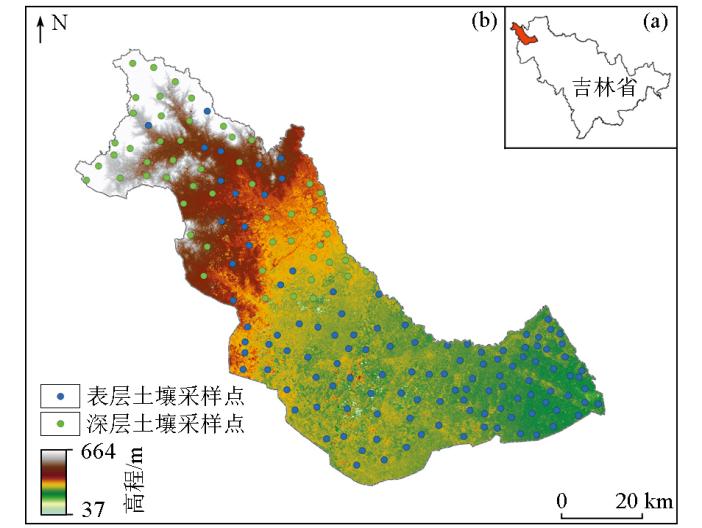
Fig.1  研究区地理位置示意(a)及采样点分布(b)
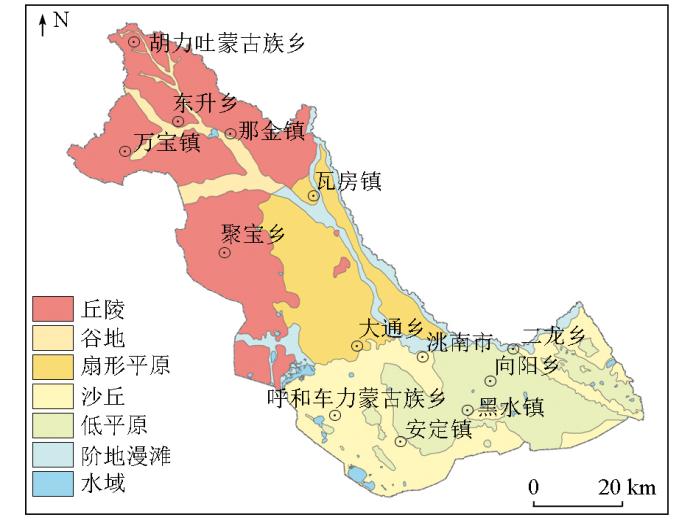
Fig.2  研究区地貌分区
元素含量比值(表层
土壤/深层土壤)
特征 元素
≤0.5 明显贫化
0.5~0.9 弱贫化
0.9~1.1 无变化 Ag、Al2O3、Ba、Be、Ce、Cu、Ga、
Ge、K2O、La、Li、MgO、Mn、Nb、
Ni、Pb、Rb、Sb、Sc、SiO2、Sr、Th、
Tl、U、V、Y、Zn
1.1~1.5 弱富集 As、Au、B、Bi、Cd、Co、Cr、F、I、
Mo、Na2O、Sn、TFe2O3、Ti、
W、Zr
1.5~2.0 中富集 CaO、Hg、P
≥2.0 强富集 Br、Cl、Corg、N、S、Se、TC
Table 1  表层和深层土壤元素含量比值特征
地貌类型 贫化(<0.9) 无变化(0.9~1.1) 弱富集(1.1~1.5) 中富集(1.5~2.0) 强富集(>2.0)
丘陵区 Ag、Al2O3、Ba、Be、Ce、Cu、Ga、Ge、K2O、Li、
Mn、Na2O、Pb、pH、Rb、Sc、SiO2、Sn、Tl、W、Zn
Au、Bi、Co、Cr、La、MgO、
Mo、Nb
As、CaO、Cd、Hg、
I、Zr
B、Br、Cl、Corg、
N、P、S、Se、TC
扇形平原区 Al2O3、As、B、Ba、Be、Ce、Co、Cu、Ga、Ge、I、
K2O、La、Li、Mn、Mo、Na2O、Nb、Ni、Pb、pH、
Rb、Sb、Sc、SiO2、Sn、Sr、Th、Tl、V、Y、Zn
Ag、Cd、Cr、F、MgO、TFe2O3
Ti、Zr
Au、Bi、Br、CaO、
Hg、P
Cl、Corg、N、S、
Se、TC
阶地漫滩区 Al2O3、Ba、Be、Ce、Ga、Ge、K2O、La、Li、Pb、
pH、Rb、Sc、SiO2、Sr、Th、Tl、U、W、Zn
Ag、As、Au、B、Cd、Cl、Co、Cr、
F、I、MgO、Mn、Mo、Nb、Ni、
Sb、Sn、TFe2O3、Ti、V、Y、Zr
Bi、Br、CaO、Cu、
P、S
Corg、Hg、N、Se、
TC
低平原区 Al2O3、Ba、Be、Ce、Ga、Ge、I、K2O、La、Li、
Na2O、Pb、pH、Rb、Sc、SiO2、Sr、Th、Ti、Tl、U、
Y、Zn
Sb、Sn、TFe2O3、V、W、Zr Hg、P、S Br、Cl、Corg、N、
Se、TC
沙丘区 Ag、Al2O3、Au、B、Ba、Be、Bi、Ce、Cr、Cu、F、
Ga、Ge、I、K2O、La、Mn、Nb、Ni、Pb、pH、Rb、
Sb、Sc、SiO2、TFe2O3、Th、Ti、Tl、U、Y、Zn、Zr
Cd、Hg、Mo、Na2O、Sn Br、Cl、P、TC、W CaO、Corg、N、
S、Se
Table 2  不同地貌类型区表层和深层土壤元素含量比值特征
方法 检测结果
KMO度量值 0.845
Bartlett的球形
度检验
近似卡方 11807.559
df 1378
Sig. 0
Table 3  表层土壤数据KMO和Bartlett的检验
方法 检测结果
KMO度量值 0.799
Bartlett的球形
度检验
近似卡方 8465.708
df 1431
Sig. 0
Table 4  深层土壤数据KMO和Bartlett的检验
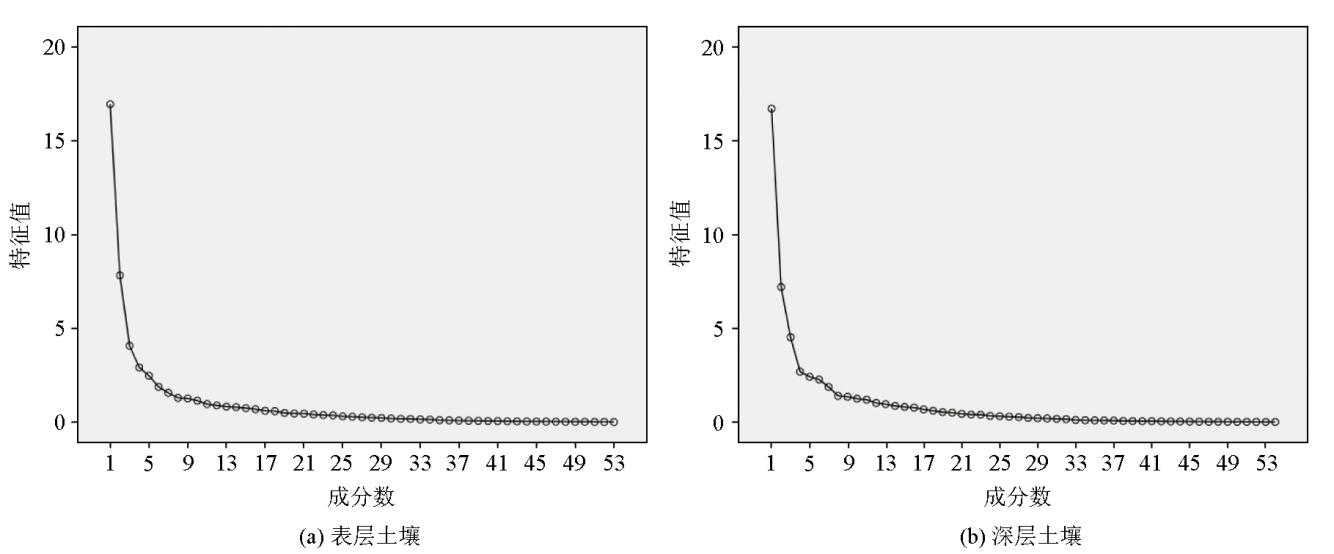
Fig.3  因子分析碎石图
因子 表层土壤因子组合 深层土壤因子组合
F1 Ba-Be-Ce-Co-Cu-Cd-Ga-Ge-
Mn-La-Li-Nb-Ni-Pb-Rb-Sc-
Th-U-Tl-V-Y
Al2O3-B-Be-Cd-Ce-Co-Cu-
Ga-Ge-La-Li-Mn-Mo-Ni-Pb-
Sb-Sc-TFe2O3-Th-V-Y
F2 CaO-MgO-Sr-K2O-SiO2 Au-CaO-K2O-MgO-Rb-Sb-
SiO2-Sr-TC-Tl
F3 Au-Corg-Hg-N-Se-TC Ba-P-Ti-Zr
F4 Cr-P-Ti-pH-Zr Corg-N-S
F5 Al2O3-TFe2O3 Na2O-Nb
F6 Ag-As-B F-I-pH
F7 Mo-S-Y Se-U
Table 5  研究区表层和深层土壤因子元素组合特征
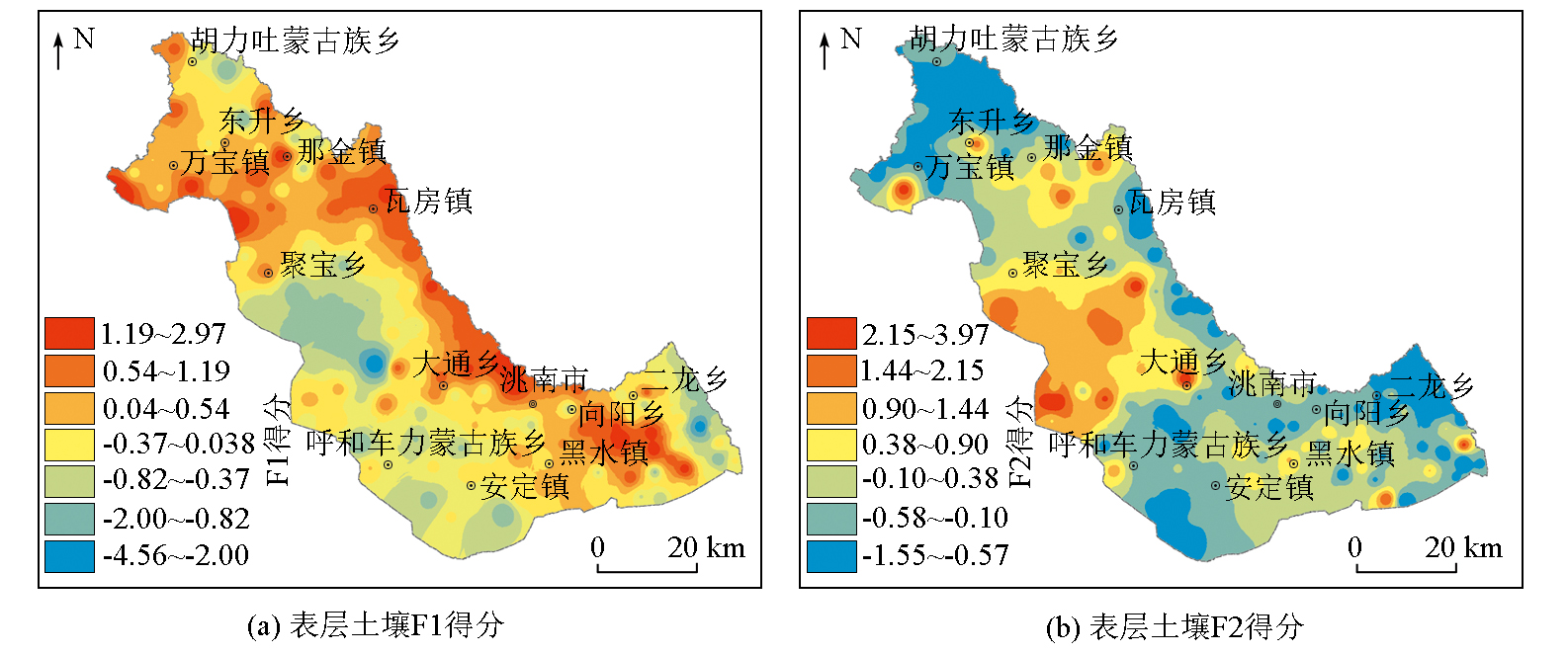
Fig.4  表层土壤F1、F2因子得分
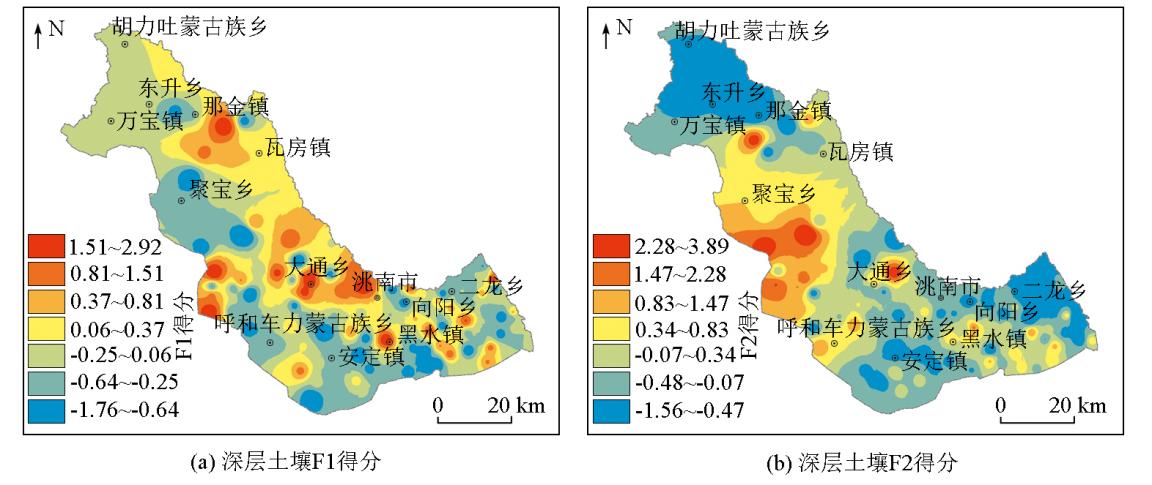
Fig.5  深层土壤F1、F2因子得分
富集系数 富集程度 元素
<0.8 贫化 Ag、Cl、F、I、Sr、Zn
0.8~1.2 无变化 Al2O3、As、Au、B、Ba、Be、Bi、CaO、Cd、Ce、
Co、Cr、Cu、Ga、Ge、Hg、K2O、La、Li、MgO、
Mn、Mo、Na2O、Nb、Ni、Pb、Rb、Sb、Sc、SiO2
Sn、TFe2O3、Th、Ti、Tl、U、V、W、Y、Zr
1.2~2.0 弱富集 Br、P、S、Se、TC
2.0~3.0 中富集 Corg、N
>3.0 强富集
Table 6  元素富集系数特征
类型 地貌类型 最小值 最大值 平均值 中位数 标准离差 变异系数
表层土壤 低平原 0.591 2.121 1.005 0.985 0.362 0.36
阶地漫滩 0.456 1.757 0.890 0.762 0.401 0.45
丘陵 0.467 2.171 1.095 0.938 0.441 0.40
沙丘 0.037 1.171 0.785 0.729 0.212 0.27
扇形平原 0.467 1.952 1.024 1.044 0.434 0.42
全区 0.037 2.171 0.965 0.896 0.362 0.375
深层土壤 低平原 0.178 1.617 0.946 0.877 0.285 0.30
阶地漫滩 0.765 2.309 1.123 0.841 0.580 0.52
丘陵 0.466 2.766 1.159 0.817 0.645 0.56
沙丘 0.630 2.090 0.919 0.810 0.290 0.32
扇形平原 0.546 3.710 1.227 0.788 0.972 0.79
全区 0.178 3.710 0.994 0.810 0.484 2.05
Table 7  表层和深层土壤不同地貌风化淋溶系数参数特征
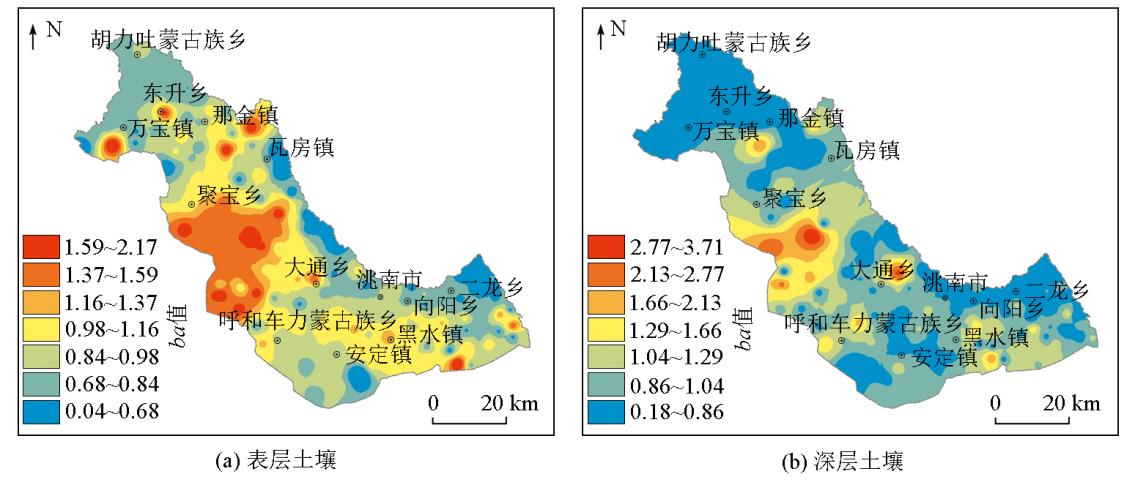
Fig.6  表层和深层土壤风化淋溶系数等值线异常
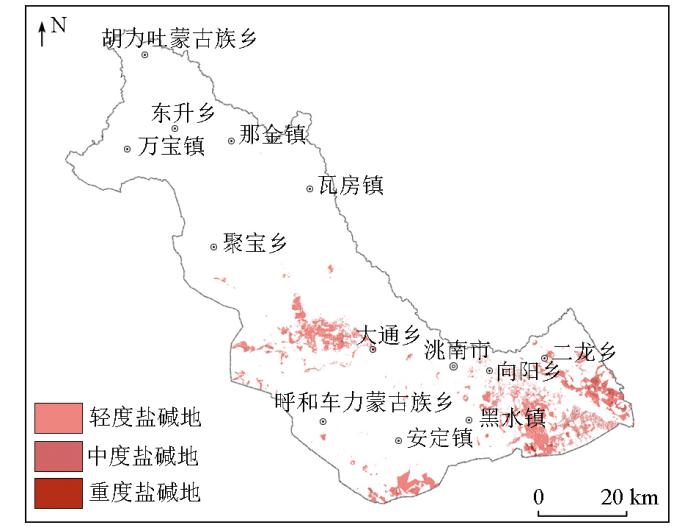
Fig.7  研究区不同盐碱程度分布
[1] 自然资源部. 关于印发《自然资源调查监测体系构建总体方案》的通知[EB/OL].(2020-01-17)[2020-02-07]. http://gi.mnr.gov.cn/202001/t20200117_2498071.html.
[1] Official website of the Ministry of Natural Resources. Notice of the Ministry of Natural Resources on Issuing the Overall Plan for the Construction of the Natural Resources Survey and Monitoring System[EB/OL].(2020-01-17)[2020-02-07]. http://gi.mnr.gov.cn/202001/t20200117_2498071.html.
[2] 自然资源部办公厅. 关于印发《地表基质分类方案(试行)》的通知[EB/OL].(2020-12-22)[2024-11-10]. https://m.mnr.gov.cn/gk/tzgg/202012/t20201222_2596025.html.
[2] Notice of the General Office of the Ministry of Natural Resources on Issuing the Classification Scheme of Surface Substrates (Trial)[EB/OL].(2020-12-22)[2024-11-10]. https://m.mnr.gov.cn/gk/tzgg/202012/t20201222_2596025.html.
[3] 郝爱兵, 殷志强, 李洪宇, 等. 地表基质的科学内涵与理论框架[J]. 地质学报, 2024, 98(11):3225-3237.
[3] Hao A B, Yin Z Q, Li H Y, et al. The scientific connotation and theoretical framework of ground substrate[J]. Acta Geologica Sinica, 2024, 98(11):3225-3237.
[4] 孔繁鹏, 赵建, 刘玖芬, 等. 关于构建东北黑土地地表基质监测网的思考[J]. 自然资源情报, 2024(11):18-24.
[4] Kong F P, Zhao J, Liu J F, et al. Reflections on the construction of ground substrate monitoring network of black soil in northeast China[J]. Natural Resources Information, 2024(11):18-24.
[5] 葛良胜, 杨贵才. 自然资源调查监测工作新领域:地表基质调查[J]. 中国国土资源经济, 2020, 33(9):4-11,67.
[5] Ge L S, Yang G C. New field of natural resources survey and monitoring:Ground substrate survey[J]. Natural Resource Economics of China, 2020, 33(9):4-11,67.
[6] 刘洪博, 孔繁鹏, 赵建, 等. 地表基质调查技术方法探索与实验——以黑龙江省宝清县黑土地调查为例[J]. 地理信息世界, 2022, 29(6):1-5.
[6] Liu H B, Kong F P, Zhao J, et al. Exploration and experiment of surface substrate investigation technique:A case study of black soil investigation in Baoqing County,Heilongjiang Province[J]. Geomatics World, 2022, 29(6):1-5.
[7] 张思源, 袁帅, 邢怡, 等. 西北干旱农牧交错带地表基质调查成果经验[J]. 地质论评, 2024, 70(3):331-332.
[7] Zhang S Y, Yuan S, Xing Y, et al. Experience and achievements of ground substrate survey in northwest arid agricultural-pastoral ecotones[J]. Geological Review, 2024, 70(3):331-332.
[8] 周雪妮, 曹亚廷, 计扬. 岷江上游干旱河谷区汶川段风化壳剖面元素地球化学特征[J]. 物探与化探, 2024, 48(3):597-608.
[8] Zhou X N, Cao Y T, Ji Y. Element geochemical characteristics of weathering crust profiles of the Wenchuan section in the upper arid valley of the Minjiang River[J]. Geophysical and Geochemical Exploration, 2024, 48(3):597-608.
[9] 刘腾, 蒋炜. 广东惠州金山新城规划区土壤地球化学背景值及分区研究[J]. 矿产勘查, 2024, 15(12):2318-2328.
[9] Liu T, Jiang W. Study on soil geochemical background value and zoning of Jinshan new town planning area in Huizhou,Guangdong Province[J]. Mineral Exploration, 2024, 15(12):2318-2328.
[10] 鲍丽然, 龚媛媛, 严明书, 等. 渝西经济区土壤地球化学基准值与背景值及元素分布特征[J]. 地球与环境, 2015, 43(1):31-40.
[10] Bao L R, Gong Y Y, Yan M S, et al. Element geochemical baseline and distributions in soil in Chongqing west economic zone,China[J]. Earth and Environment, 2015, 43(1):31-40.
[11] 曾琴琴, 王永华, 刘才泽, 等. 四川省南部县土壤地球化学元素分布特征研究[J]. 沉积与特提斯地质, 2021, 41(4):656-662.
[11] Zeng Q Q, Wang Y H, Liu C Z, et al. A study on distribution of elements of soil in Nanbu County,Sichuan Province[J]. Sedimentary Geology and Tethyan Geology, 2021, 41(4):656-662.
[12] 周道玮, 胡娟, 李强, 等. 松嫩平原盐碱地研究进展[J]. 生态学杂志, 2025, 44(5):1671-1677.
[12] Zhou D W, Hu J, Li Q, et al. Research progress of salt-affected land in Songnen Plain[J]. Chinese Journal of Ecology, 2025, 44(5):1671-1677.
[13] 林年丰, 汤洁. 松嫩平原环境演变与土地盐碱化、荒漠化的成因分析[J]. 第四纪研究, 2005, 25(4):474-483.
[13] Lin N F, Tang J. Study on the environment evolution and the analysis of causes to land salinization and desertification in Songnen plain[J]. Quaternary Sciences, 2005, 25(4):474-483.
[14] 刘俊贺, 迟云平, 谢远云, 等. 松嫩沙地地球化学特征及其对风尘物质贡献的指示[J]. 中国沙漠, 2023, 43(3):252-263.
[14] Liu J H, Chi Y P, Xie Y Y, et al. Geochemical characteristics of Songnen sandy land and its indication of contribution to aeolian dust[J]. Journal of Desert Research, 2023, 43(3):252-263.
[15] 蓝天. 吉林省西部土壤盐渍化地球化学评价与成因分析[D]. 长春: 吉林大学, 2023.
[15] Lan T. Geochemical evaluation and cause analysis of soil salinization in the west of Jilin Province[D]. Changchun: Jilin University, 2023.
[16] 张哲寰, 戴慧敏, 宋运红, 等. 黑龙江省乌裕尔河流域土壤中某些微量元素地球化学特征[J]. 物探与化探, 2022, 46(5):1097-1104.
[16] Zhang Z H, Dai H M, Song Y H, et al. Geochemical characteristics of some soil trace elements in the Wuyuer River Basin,Heilongjiang Province[J]. Geophysical and Geochemical Exploration, 2022, 46(5):1097-1104.
[17] 陆继龙, 周永昶, 周云轩. 吉林省黑土某些微量元素环境地球化学特征[J]. 土壤通报, 2002, 33(5):365-368.
[17] Lu J L, Zhou Y C, Zhou Y X. Environmental geochemical characteristics of some microelements in the black soil of Jilin Province[J]. Chinese Journal of Soil Science, 2002, 33(5):365-368.
[18] 赵万苍, 刘连文, 陈骏, 等. 中国沙漠元素地球化学区域特征及其对黄土物源的指示意义[J]. 中国科学:地球科学, 2019, 49(9):1425-1438.
[18] Zhao W C, Liu L W, Chen J, et al. Regional characteristics of element geochemistry in China desert and its indicative significance for loess provenance[J]. Scientia Sinica:Terrae, 2019, 49(9):1425-1438.
[19] 宋运红, 杨凤超, 刘凯, 等. 三江平原耕地土壤重金属元素分布特征及影响因素的多元统计分析[J]. 物探与化探, 2022, 46(5):1064-1075.
[19] Song Y H, Yang F C, Liu K, et al. A multivariate statistical analysis of the distribution and influencing factors of heavy metal elements in the cultivated land of the Sanjiang Plain[J]. Geophysical and Geochemical Exploration, 2022, 46(5):1064-1075.
[20] 孙璐, 董燕, 凤蔚, 等. 雄安新区土壤地球化学特征及控制因素[J]. 地理研究, 2022, 41(6):1715-1730.
[20] Sun L, Dong Y, Feng W, et al. Geochemical characteristics of soil elements and its driving mechanisms in the Xiong'an new area,China[J]. Geographical Research, 2022, 41(6):1715-1730.
[21] 陈华强. 基于SPSS的因子分析在多目标地球化学分区中的应用——以广东省龙门县为例[J]. 中国高新技术企业, 2011(33):71-73.
[21] Chen H Q. Application of factor analysis based on SPSS in multi-objective geochemical zoning:A case study of Longmen County,Guangdong Province[J]. China High-Tech Enterprises, 2011(33):71-73.
[22] 俞伯汀, 管敏琳, 王其春, 等. 耕地土壤地球化学元素富集与风化淋溶特征分析——以杭州市为例[J]. 环境生态学, 2024, 6(9):8-16.
[22] Yu B T, Guan M L, WAGN Q C, et al. Analysis of geochemical element enrichment and weathering leaching characteristics in farmland soil:A case study of Hangzhou City[J]. Environmental Ecology, 2024, 6(9):8-16.
[23] 卢钊, 周萍, 王玉真. 陕西紫阳富硒土元素迁移特征及其质量评估[J]. 中国矿业, 2022, 31(8):69-78.
[23] Lu Z, Zhou P, Wang Y Z. Element migration characteristics and quality assessment of selenium-rich soils in Ziyang,Shaanxi[J]. China Mining Magazine, 2022, 31(8):69-78.
[24] 张倩, 韩贵琳. 九龙江流域土壤稀土元素分布特征及控制因素[J]. 长江流域资源与环境, 2022, 31(7):1494-1502.
[24] Zhang Q, Han G L. Distribution and controlling factors of soil rare earth elements in Jiulongjiang River catchment[J]. Resources and Environment in the Yangtze Basin, 2022, 31(7):1494-1502.
[25] 中华人民共和国国土资源部. DZ/T0295—2016土地质量地球化学评价规范[S]. 北京: 中国标准出版社, 2016.
[25] Ministry of Land and Resources of the People’s Republic of China. DZ/T0295—2016Determinationoflandqualitygeochemicalevaluation[S]. Beijing: Standards Press of China, 2016.
[1] 陈庚户, 郎兴海, 王兆帅, 董维财, 王登科, 向佐朋, 李壮, 叶紫枫, 吴昌益, 王旭辉, 吴天文, 罗超. 青海松树南沟金矿区土壤地球化学特征及异常评价[J]. 物探与化探, 2025, 49(6): 1281-1290.
[2] 龚建生, 郎兴海, 王兆帅, 邓煜霖, 吴昌益, 何青, 李志军, 丁枫, 詹宏宇, 娄渝明. 西藏谢通门县雄村矿集区及其外围水系沉积物地球化学特征及异常评价[J]. 物探与化探, 2025, 49(6): 1291-1302.
[3] 张宏燕, 赵焕, 郭鹏. 河南省桐柏县老湾金矿地球化学特征及深部成矿预测[J]. 物探与化探, 2025, 49(5): 1039-1052.
[4] 廖启林, 黄顺生, 许伟伟, 崔晓丹, 金洋, 刘玲, 汪媛媛, 李文博, 周强. 江苏省里下河地区富硒土壤元素地球化学特征及其成因机制[J]. 物探与化探, 2024, 48(4): 1114-1124.
[5] 张文斌, 周贤君, 侯翠霞, 王宁祖, 孙平原, 赵振琯, 何碧. 甘肃北山老君庙北金矿土壤地球化学特征及找矿前景[J]. 物探与化探, 2024, 48(4): 945-953.
[6] 张宏伟, 杨恩林, 焦树林, 王贵云, 杨善进. 七星关区耕地土壤Ge地球化学特征及其与作物的吸收关系[J]. 物探与化探, 2024, 48(2): 534-544.
[7] 杨济远, 胡新茁, 周敬, 齐朋超, 李泽阳, 孟家葆, 许凡, 张会彬, 齐慧云. 冀西北宣化盆地髫髻山组粗面岩年代学、地球化学特征及其地质意义[J]. 物探与化探, 2024, 48(1): 1-14.
[8] 徐磊, 李俊, 瞿镪, 文方平, 赵萌生, 程琰勋, 徐杰, 王浩宇. 滇中中高山丘陵区大气干湿沉降元素地球化学特征及来源解析[J]. 物探与化探, 2023, 47(6): 1602-1610.
[9] 姜冰, 刘阳, 吴振, 张德明, 孙增兵, 马健. 高密地区灌溉水及土壤氟地球化学特征[J]. 物探与化探, 2023, 47(5): 1348-1353.
[10] 张嘉升, 周伟, 李伟良, 祁晓鹏, 杨杰, 王璐. 陕西简池镇地区1∶2.5万水系沉积物测量地球化学特征及找矿潜力[J]. 物探与化探, 2023, 47(3): 659-669.
[11] 李俊俊, 魏宇, 张庆松, 王维华, 柳维, 向亮. 四川马头金矿区土壤地球化学测量异常特征及找矿模型[J]. 物探与化探, 2023, 47(2): 309-320.
[12] 王志强, 杨建锋, 石天池. 宁夏石嘴山地区富硒土壤及其利用前景[J]. 物探与化探, 2023, 47(1): 228-237.
[13] 肖睿, 庞守吉, 祝有海, 张帅, 邹燚. 新疆甜水海地区红山湖泉水化学特征及其意义[J]. 物探与化探, 2023, 47(1): 39-46.
[14] 马常莲, 周金龙, 曾妍妍, 任贵兵, 王松涛. 新疆若羌县农用地表层土壤硒氟碘地球化学特征[J]. 物探与化探, 2022, 46(6): 1573-1580.
[15] 张哲寰, 戴慧敏, 宋运红, 杨佳佳. 黑龙江省乌裕尔河流域土壤中某些微量元素地球化学特征[J]. 物探与化探, 2022, 46(5): 1097-1104.
Viewed
Full text


Abstract

Cited

  Shared   
  Discussed   
京ICP备05055290号-3
版权所有 © 2021《物探与化探》编辑部
通讯地址:北京市学院路29号航遥中心 邮编:100083
电话:010-62060192;62060193 E-mail:whtbjb@sina.com , whtbjb@163.com