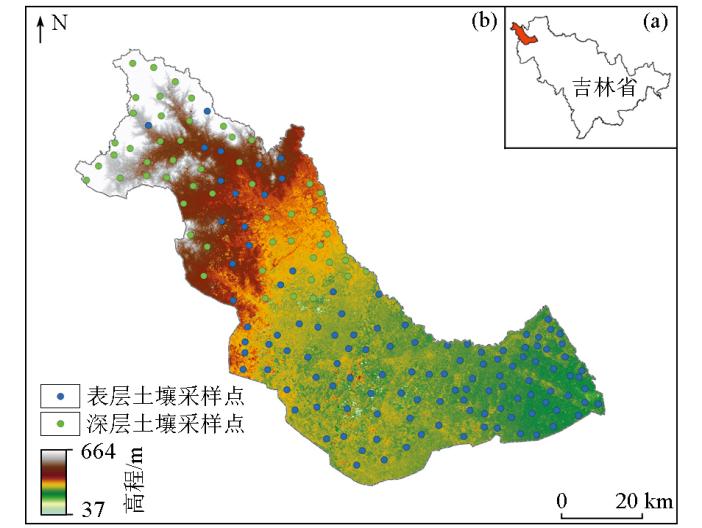
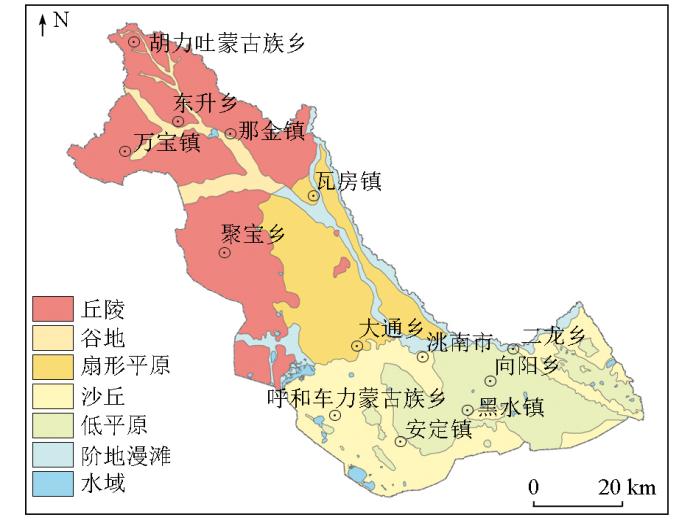
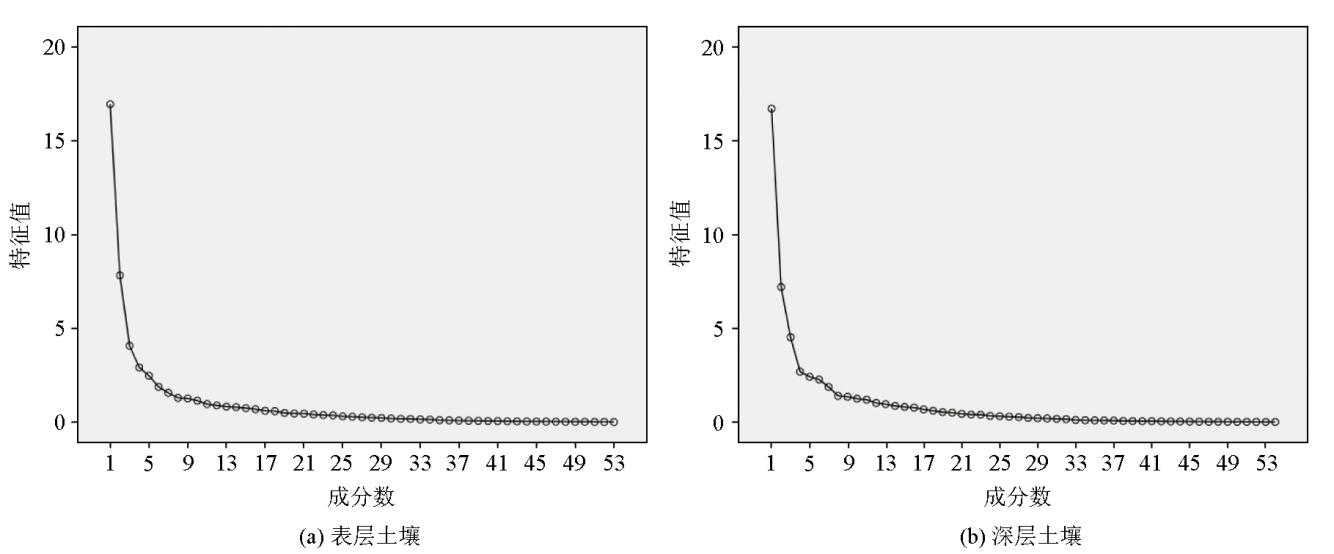
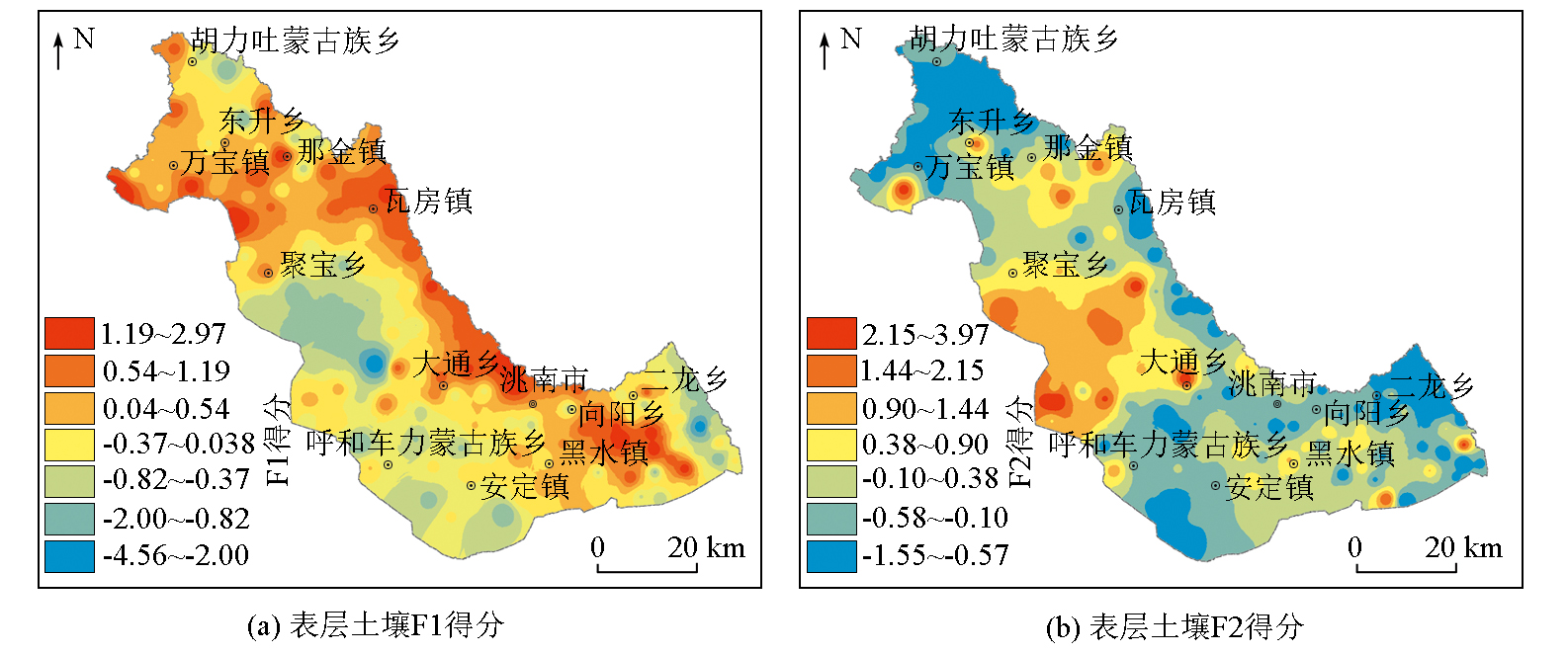
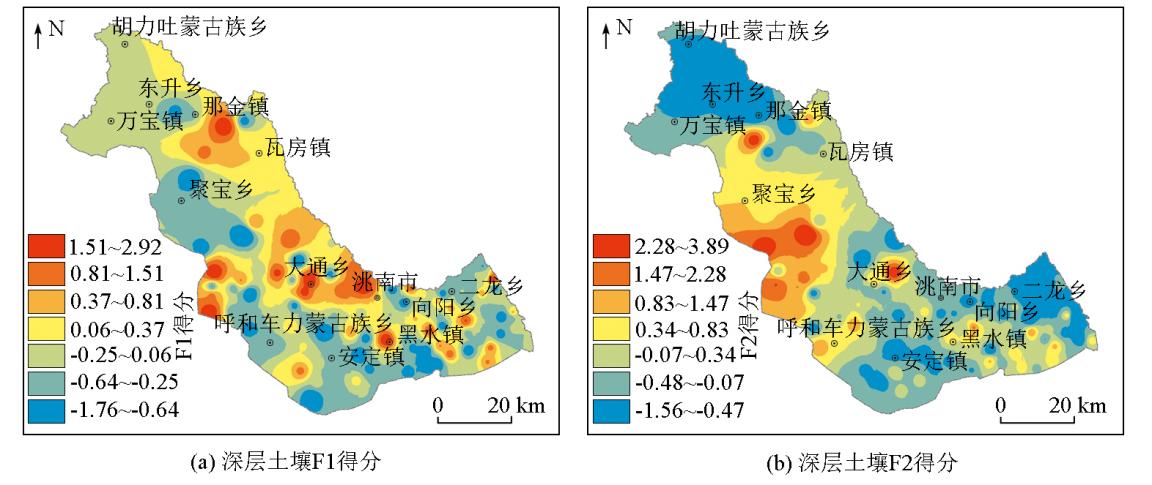
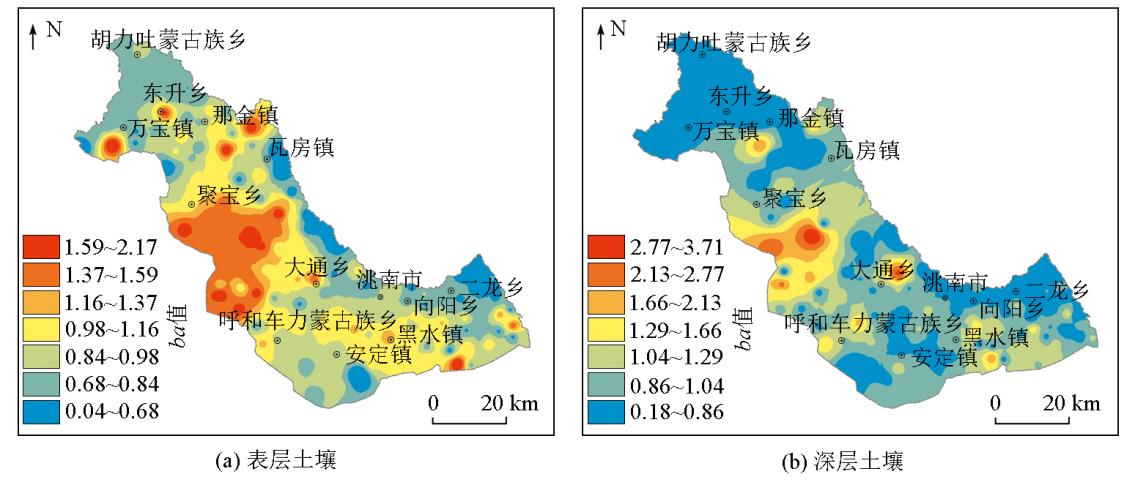
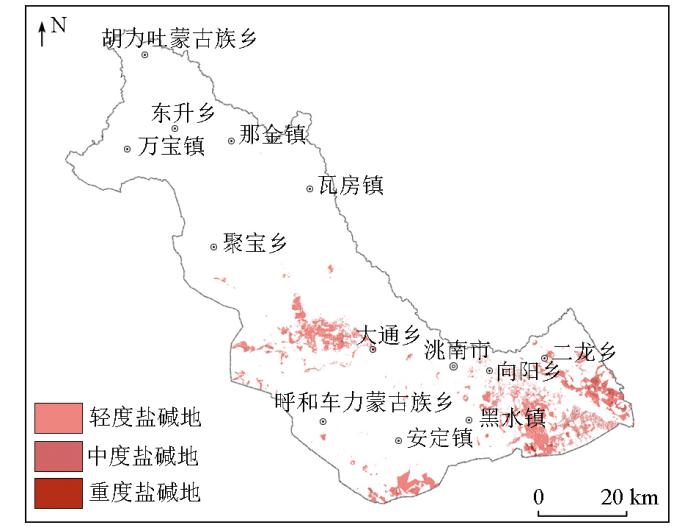
This study investigated the shallow surface substrate in the Taonan area, western Songnen Plain. Accordingly, it revealed the elemental differentiation between surface (0~20 cm) and deeper (150~200 cm) soils in the shallow surface substrate layer, as well as the genetic mechanisms of salinization in this layer. The results show that compared to deeper soils, surface soils in the Taonan area are strongly enriched in organic carbon (Corg) and N and slightly enriched in Br, P, S, Se, and total carbon (TC). In contrast, no significant differences are identified in heavy metals, rare earth elements (REEs), and other trace elements. These findings suggest the primary causes of the enrichment of various element indicators in surface soils include agricultural activities, biogeochemical cycles, and water-salt migration. The factor analysis indicates that for surface soils, factor F1 is dominated by the heavy metal-REE combination (variance contribution rate: 26.66%), with its spatial distribution associated with fluvial deposition and agricultural activities. Furthermore, factor F2 for these soils is the salt-related element combination (including CaO and MgO; variance contribution rate: 11.24%), indicating the risk of salinization in low-lying zones. In contrast, for deeper soils, factor F1 is the combination of elements such as Al2O3, B, La, and Sc (variance contribution rate: 27.34%), reflecting the compositional characteristics of bedrocks or soil parent materials. Factor F2 for these soils is the combination of elements related to geological settings and salinity (variance contribution rate: 13.09%), indicating geological settings and salinization. The weathering and leaching coefficient, represented by the Ba value, shows significant spatial differentiation. Compared to deeper soils, surface soils manifest a larger range of high Ba values, primarily distributed in the zone south of Jubao Township and west of Datong Township, as well as the southern part of Erlong Township. This distribution, coinciding with the high-value zones of salt-related factor F2, is principally affected by topography and deep parent material types. In the low-lying plain area and the front of alluvial fans, the low-lying terrains, poor drainage, and intense evaporation lead to salt accumulation, causing a high risk of salinization. In the hilly area, the high values of factor F2 are associated with the bedrock lithology, with salts originating from weathered bedrocks. The results of this study will provide a geochemical basis for land resource optimization and ecological restoration in the Taonan area.
Official website of the Ministry of Natural Resources. Notice of the Ministry of Natural Resources on Issuing the Overall Plan for the Construction of the Natural Resources Survey and Monitoring System[EB/OL].(2020-01-17)[2020-02-07]. http://gi.mnr.gov.cn/202001/t20200117_2498071.html.
Notice of the General Office of the Ministry of Natural Resources on Issuing the Classification Scheme of Surface Substrates (Trial)[EB/OL].(2020-12-22)[2024-11-10]. https://m.mnr.gov.cn/gk/tzgg/202012/t20201222_2596025.html.
Hao A B, Yin Z Q, Li H Y, et al. The scientific connotation and theoretical framework of ground substrate[J]. Acta Geologica Sinica, 2024, 98(11):3225-3237.
Kong F P, Zhao J, Liu J F, et al. Reflections on the construction of ground substrate monitoring network of black soil in northeast China[J]. Natural Resources Information, 2024(11):18-24.
Ge L S, Yang G C. New field of natural resources survey and monitoring:Ground substrate survey[J]. Natural Resource Economics of China, 2020, 33(9):4-11,67.
Liu H B, Kong F P, Zhao J, et al. Exploration and experiment of surface substrate investigation technique:A case study of black soil investigation in Baoqing County,Heilongjiang Province[J]. Geomatics World, 2022, 29(6):1-5.
Zhang S Y, Yuan S, Xing Y, et al. Experience and achievements of ground substrate survey in northwest arid agricultural-pastoral ecotones[J]. Geological Review, 2024, 70(3):331-332.
Zhou X N, Cao Y T, Ji Y. Element geochemical characteristics of weathering crust profiles of the Wenchuan section in the upper arid valley of the Minjiang River[J]. Geophysical and Geochemical Exploration, 2024, 48(3):597-608.
Liu T, Jiang W. Study on soil geochemical background value and zoning of Jinshan new town planning area in Huizhou,Guangdong Province[J]. Mineral Exploration, 2024, 15(12):2318-2328.
Bao L R, Gong Y Y, Yan M S, et al. Element geochemical baseline and distributions in soil in Chongqing west economic zone,China[J]. Earth and Environment, 2015, 43(1):31-40.
Zeng Q Q, Wang Y H, Liu C Z, et al. A study on distribution of elements of soil in Nanbu County,Sichuan Province[J]. Sedimentary Geology and Tethyan Geology, 2021, 41(4):656-662.
Lin N F, Tang J. Study on the environment evolution and the analysis of causes to land salinization and desertification in Songnen plain[J]. Quaternary Sciences, 2005, 25(4):474-483.
Liu J H, Chi Y P, Xie Y Y, et al. Geochemical characteristics of Songnen sandy land and its indication of contribution to aeolian dust[J]. Journal of Desert Research, 2023, 43(3):252-263.
[15]
蓝天. 吉林省西部土壤盐渍化地球化学评价与成因分析[D]. 长春: 吉林大学, 2023.
[15]
Lan T. Geochemical evaluation and cause analysis of soil salinization in the west of Jilin Province[D]. Changchun: Jilin University, 2023.
Zhang Z H, Dai H M, Song Y H, et al. Geochemical characteristics of some soil trace elements in the Wuyuer River Basin,Heilongjiang Province[J]. Geophysical and Geochemical Exploration, 2022, 46(5):1097-1104.
Lu J L, Zhou Y C, Zhou Y X. Environmental geochemical characteristics of some microelements in the black soil of Jilin Province[J]. Chinese Journal of Soil Science, 2002, 33(5):365-368.
Zhao W C, Liu L W, Chen J, et al. Regional characteristics of element geochemistry in China desert and its indicative significance for loess provenance[J]. Scientia Sinica:Terrae, 2019, 49(9):1425-1438.
Song Y H, Yang F C, Liu K, et al. A multivariate statistical analysis of the distribution and influencing factors of heavy metal elements in the cultivated land of the Sanjiang Plain[J]. Geophysical and Geochemical Exploration, 2022, 46(5):1064-1075.
Sun L, Dong Y, Feng W, et al. Geochemical characteristics of soil elements and its driving mechanisms in the Xiong'an new area,China[J]. Geographical Research, 2022, 41(6):1715-1730.
Chen H Q. Application of factor analysis based on SPSS in multi-objective geochemical zoning:A case study of Longmen County,Guangdong Province[J]. China High-Tech Enterprises, 2011(33):71-73.
Yu B T, Guan M L, WAGN Q C, et al. Analysis of geochemical element enrichment and weathering leaching characteristics in farmland soil:A case study of Hangzhou City[J]. Environmental Ecology, 2024, 6(9):8-16.
Lu Z, Zhou P, Wang Y Z. Element migration characteristics and quality assessment of selenium-rich soils in Ziyang,Shaanxi[J]. China Mining Magazine, 2022, 31(8):69-78.
Zhang Q, Han G L. Distribution and controlling factors of soil rare earth elements in Jiulongjiang River catchment[J]. Resources and Environment in the Yangtze Basin, 2022, 31(7):1494-1502.
Ministry of Land and Resources of the People’s Republic of China. DZ/T0295—2016Determinationoflandqualitygeochemicalevaluation[S]. Beijing: Standards Press of China, 2016.