Geochemical characteristics and anomaly assessments of soils in the Songshunangou gold mining area, Qinghai Province
CHEN Geng-Hu1(), LANG Xing-Hai2(), WANG Zhao-Shuai3, DONG Wei-Cai1, WANG Deng-Ke1, XIANG Zuo-Peng2, LI Zhuang4, YE Zi-Feng2, WU Chang-Yi2, WANG Xu-Hui2, WU Tian-Wen1, LUO Chao1
1. Sichuan Xinshun Mining Co., Ltd., Chengdu 610041, China 2. College of Earth and Planetary Sciences, Chengdu University of Technology, Chengdu 610059, China 3. Shandong Geology and Mineral Resources Engineering Group Co., Ltd., Jinan 250013, China 4. College of Greography and Resources Science, Neijiang Normal University, Neijiang 641100, China
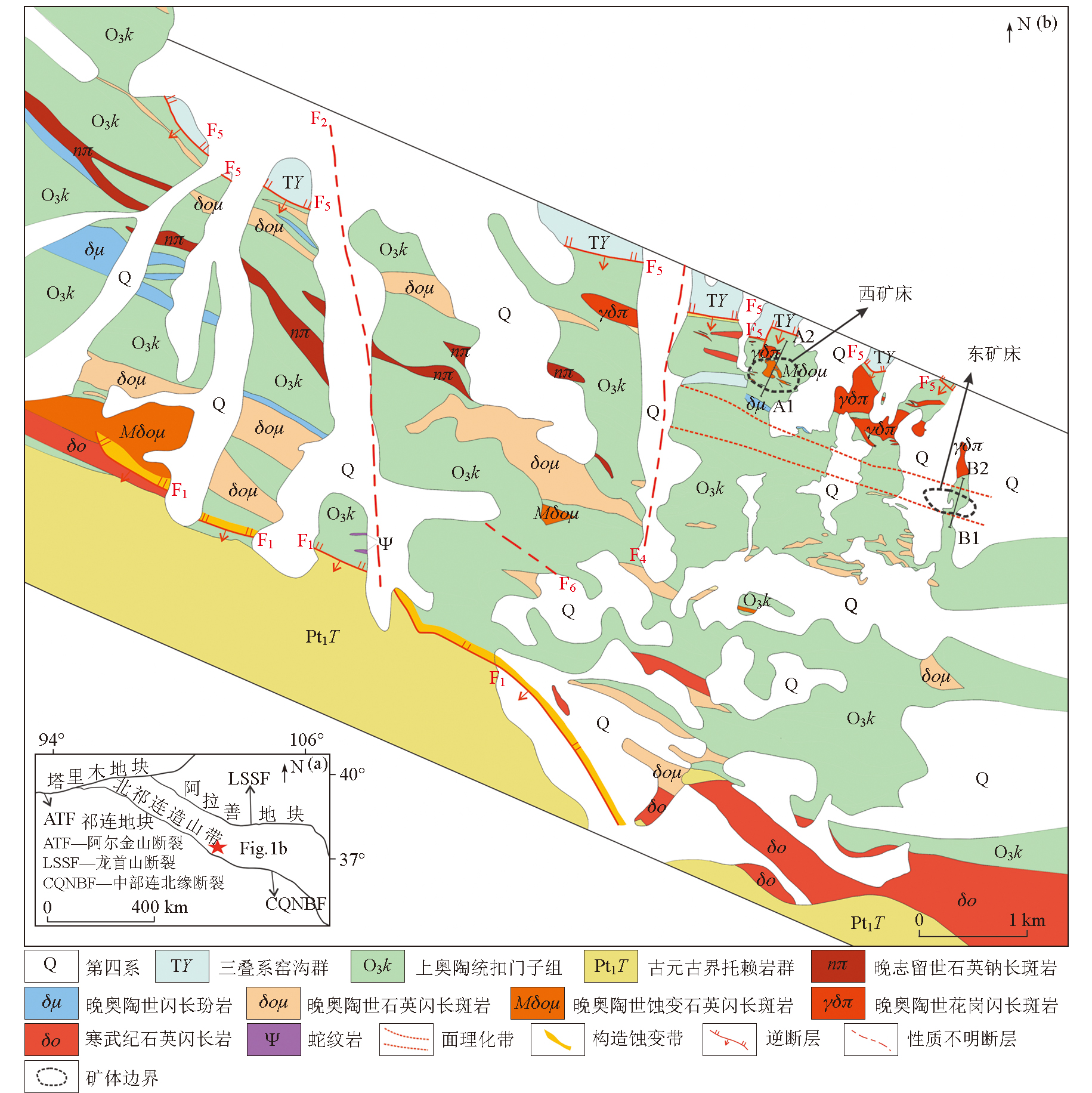
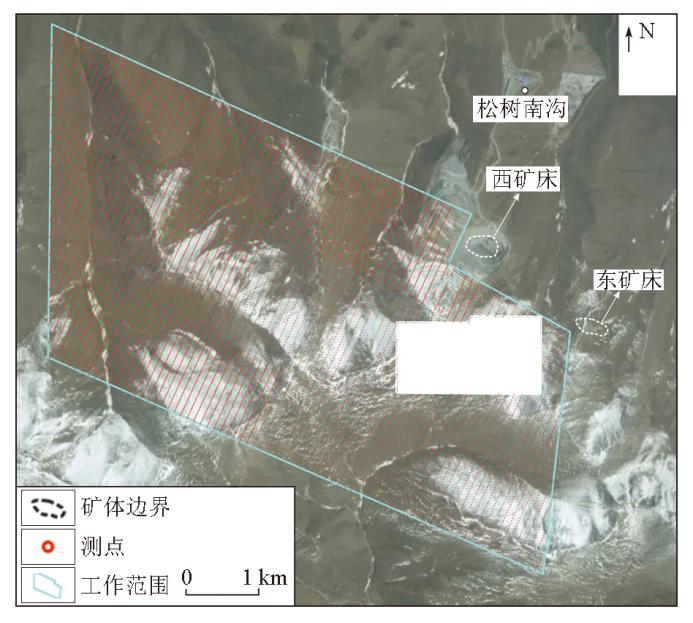
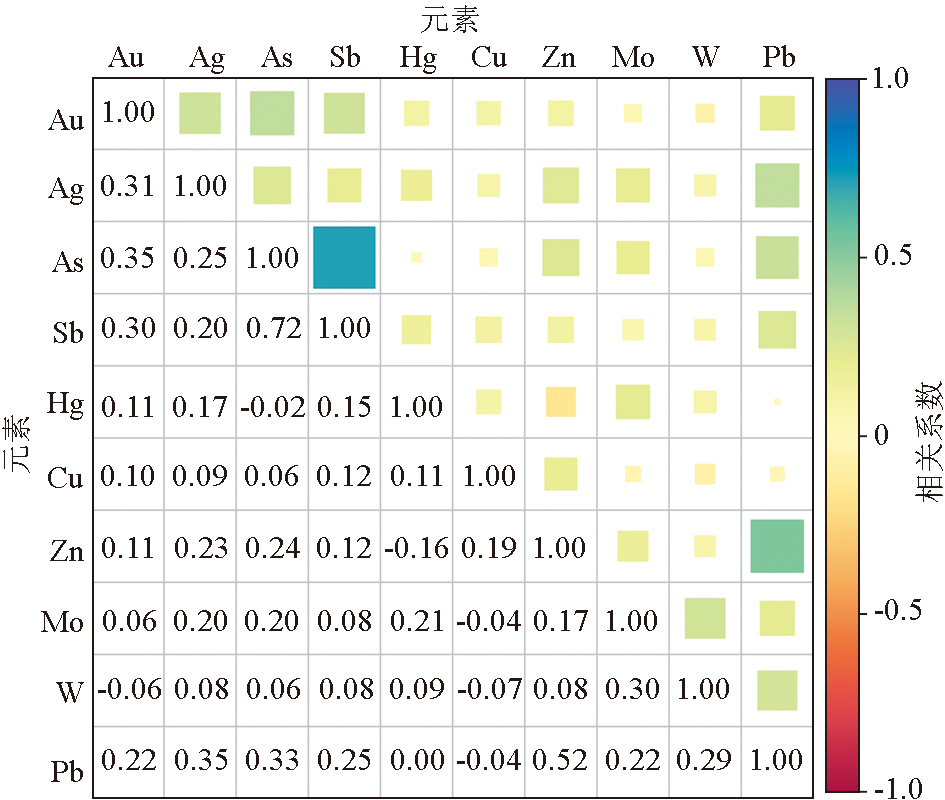
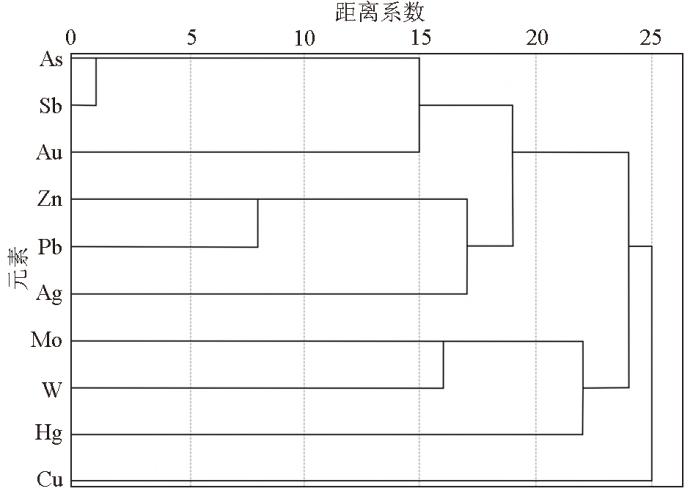
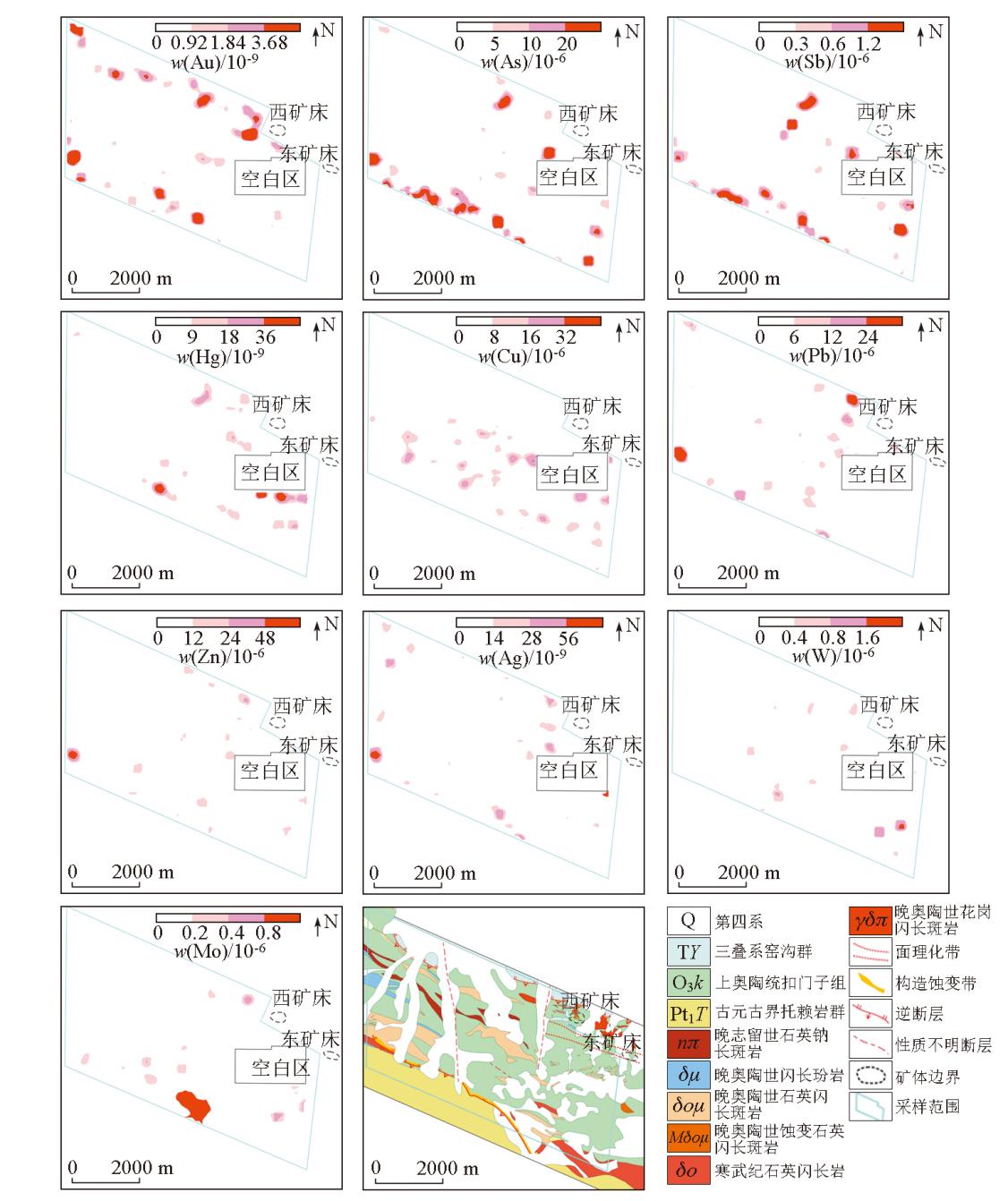
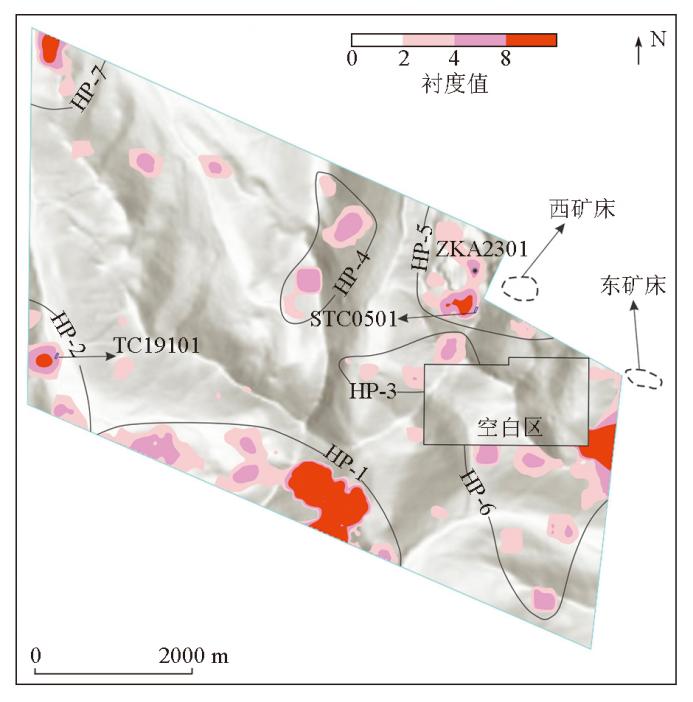
The Songshunangou gold mining area in Qinghai Province is situated in the central part of the North Qilian metallogenic/orogenic belt. Two deposits have been identified in its eastern and western portions, with cumulative proven Au resources exceeding 34 t, establishing them as large-scale deposits. Moreover, the area holds significant potential for ore prospecting, necessitating an urgent need for research into prospecting orientations to support mineral exploration efforts. Hence, based on the anomaly analysis of 1∶10 000 soil geochemical survey data and employing the two-window moving average method, this study identified the anomaly distributions and enrichment patterns of 10 elements (i.e., Au, As, Sb, Hg, Cu, Pb, Zn, Ag, W, and Mo) in the area. By analyzing elemental geochemical anomaly data and integrating the geological conditions for mineralization, this study delineated composite anomaly zones in the area using the average contrast method, followed by anomaly assessments. The results indicate that Au is the primary ore-forming element in the area, characterized by strong enrichment and significant variability, suggesting high mineralization potential. Seven composite soil geochemical anomaly zones were delineated in the area, with zones HP-1, HP-2, and HP-5 demonstrating the greatest potential for mineral exploration. Engineering validation confirms the presence of two ore/mineralized bodies, with one exhibiting an ore thickness of 1.5 m and a gold grade of 0.57 g/t in zone HP-2 and the other featuring an ore thickness of 1.42 m and a gold grade of 1.67 g/t in zone HP-5. Overall, this study provides geochemical evidence for determining prospecting orientations in the Songshunangou gold mining area while offering a reference for the deployment of subsequent mineral exploration work in the area.
Lang X H, Xiang Z P, Wang X H, et al. Unveiling an Early Paleozoic porphyry-epithermal gold system in Songshunangou district,North Qilian,northwest China:Geological and geochronological constraints[J]. Ore Geology Reviews, 2024, 164:105816.
doi: 10.1016/j.oregeorev.2023.105816
Long H. The features of geological structure in Songshunangou gold deposit of Menyuan County,Qinghai Province[J]. Science and Technology of West China, 2014, 13(9):15-17.
[3]
王檬. 青海门源县松树南沟金矿床地质特征及成因探讨[D]. 长春: 吉林大学, 2017.
[3]
Wang M. Study on the geological characteristics and genesis of songshunangou Au deposit in Menyuan county,Qinghai Province[D]. Changchun: Jilin University, 2017.
Xu Z H, Ma Y J, Cao J H, et al. Analysis on metallogenic geological characteristics and prospecting potential of the Balahatu-Baitougou area,Qinghai[J]. Mineral Exploration, 2019, 10(9):2180-2186.
[5]
Xiang Z P, Lang X H, Wang X H, et al. Origin and tectonic setting of the ore-related late Ordovician porphyry in the songshunangou district,north Qilian,northwest China:Whole-rock geochemical,Sr-Nd-Pb isotopes and zircon Hf isotopes constraints[J]. Journal of Earth Science, 2025, 36(3):1051-1068.
doi: 10.1007/s12583-024-0114-0
Zhang T, Yi Y C, Xiao X Q, et al. The ore-controlling factors and prospecting guide analysis of Songshu Nangou Gold Deposit,Qinghai Province[J]. Mineral Exploration, 2011, 2(1):49-53.
Liu Q, Wang G, Wang D K. Geochronology and its geological significance for granodiorite porphyry in the songshunangou Au deposit,north Qilian Mountains[J]. Acta Geologica Sichuan, 2019, 39(1):15-21.
Wang G, Xiao X L, Liu Q, et al. Zircon U-Pb age and geochemistry of basaltic andesite from the Songshunangou Au deposit and their geodynamic implication[J]. Sichuan Journal of geology, 2017, 37(3):375-382.
Xiao X L. Research on metallogenic prediction and key technology of mineral dressing of south Songshunangou gold deposit in Qinghai[D]. Chengdu: Chengdu University of Technology, 2013.
[10]
白云. 北祁连造山带松树南沟金矿床成因与成矿预测[D]. 成都: 成都理工大学, 2019.
[10]
Bai Y. Genesis and metallogenic prediction for songshunangou gold deposit in the northern Qilian orogenic belt[D]. Chengdu: Chengdu University of Technology, 2019.
[11]
Wang X H, Wu W Z, Lang X H, et al. Apatite and zircon compositions as petrogenetic and metallogenic indicators for late Ordovician porphyries in the Songshunangou gold district,North Qilian orogenic belt (China)[J]. Ore Geology Reviews, 2025, 179:106502.
doi: 10.1016/j.oregeorev.2025.106502
Wang Z S, Lang X H, Xiang Z P, et al. Research on prospecting prediction of Songshunangou gold district in Qinghai Province based on Three-dimensional geological modeling[J]. Computing Techniques for Geophysical and Geochemical Exploration, 2025, 47(4):545-556.
Li G M. Metallogenic regularity and prognosis of copper-iron polymetallic deposits in Gangdise metallogenic belt and its adjacent areas in Xizang[M]. Beijing: Geological Publishing House, 2011.
Han P, Lang X H, Deng Y L, et al. Soil geochemical characteristics and abnormal evaluation of Xiongxcun district peripheral areas,Xietongmen county,Tibet[J]. Computing Techniques for Geophysical and Geochemical Exploration, 2018, 40(6):812-819.
Tian S H. Geochemical characteristics and prospecting predictions of 1∶50,000 stream sediments in Jiangma area,Geji County,Tibet[D]. Chengdu: Chengdu University of Technology, 2019.
Zhao R J. Application of different data processing method in geochemical exploration in the north Luanchuan[J]. Geology and Prospecting, 2006, 42(3):67-71.
Li H, Xu G Z, Sun L, et al. A quantitative method for integrated anomaly map of geochemical prospecting and application[J]. Geological Bulletin of China, 2019, 38(6):1062-1070.
Xie X, Wei G H, Guo Y J, et al. Delineation of comprehensive geochemical anomaly:An example of 1∶10,000 soil geochemical survey in Qingluoshan area,Jixi County,Anhui[J]. Mineral Resources and Geology, 2021, 35(4):763-769.
Huang J Z, Yang M L, Wang X L, et al. Geochemical characteristics of stream sediments and prospecting directions in Wagang area of Sichuan Province[J]. East China Geology, 2024, 45(3):332-344.
Weng W F, Luo J Y, Xu Z Y. Geological and geochemical characteristics and prospecting model of the Waitongkeng gold deposit in southern Anhui Province[J]. East China Geology, 2023, 44(1):13-27.
Wang D, Li Y G, Zhao W, et al. The application of the anomaly threshold contrast filtering method to the geochemical data processing of the ranwu sheet[J]. Geophysical and Geochemical Exploration, 2013, 37(2):344-349.
Yang X X, Luo X R, Zheng C J, et al. Geochemical characteristics of soil and prospecting direction in the guoqing area,northern margin of the Hengyang Basin[J]. Geology and Exploration, 2018, 54(4):762-771.
Yang Y B, Huang S S, Wang L J, et al. Geochemical characteristics of soil and their prospecting effect in the Jinshan area of Liyang Basin[J]. Geology and Exploration, 2023, 59(4):791-802.